Hotel Punta Tragara – The Art of Living with Light
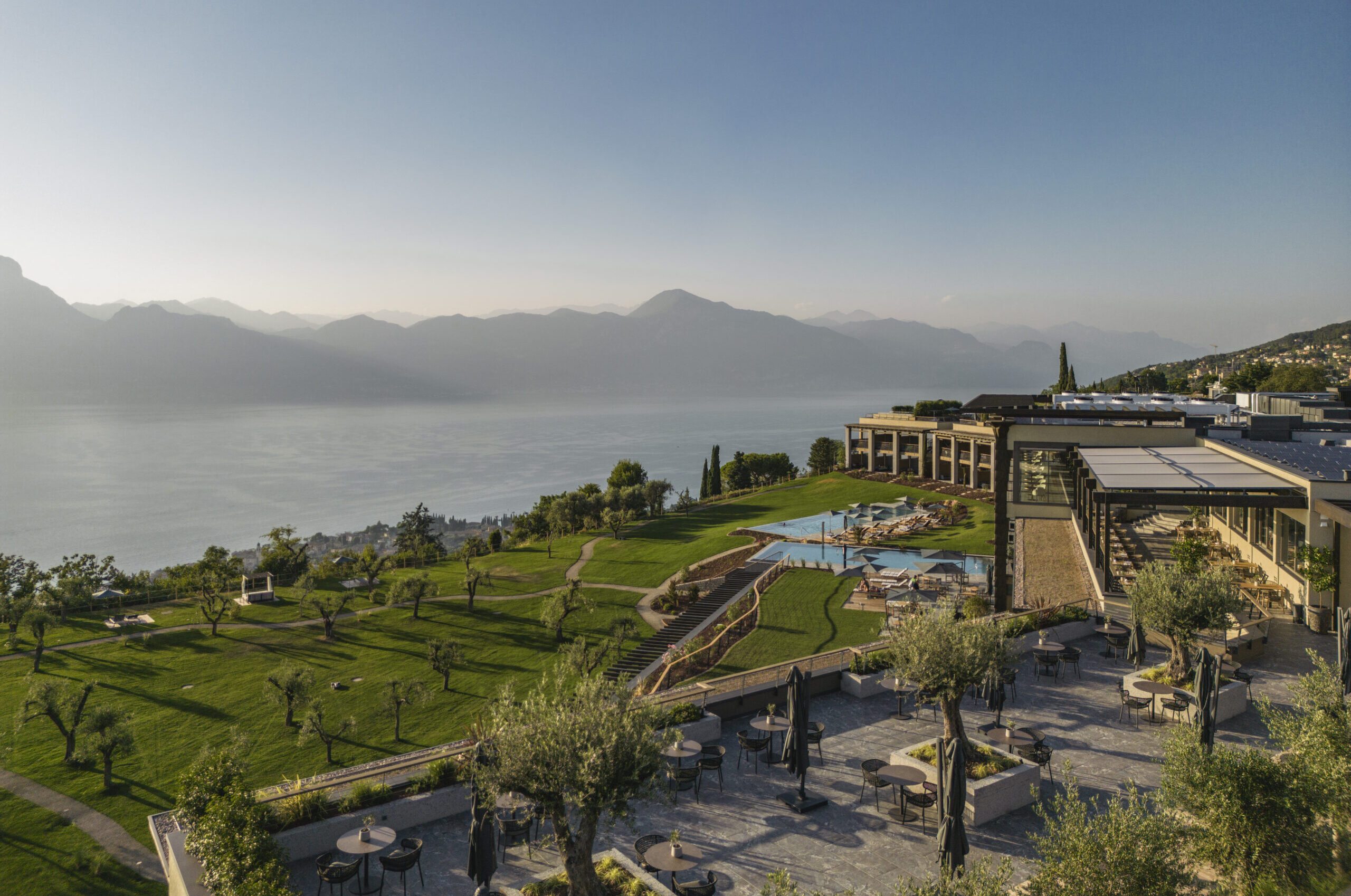
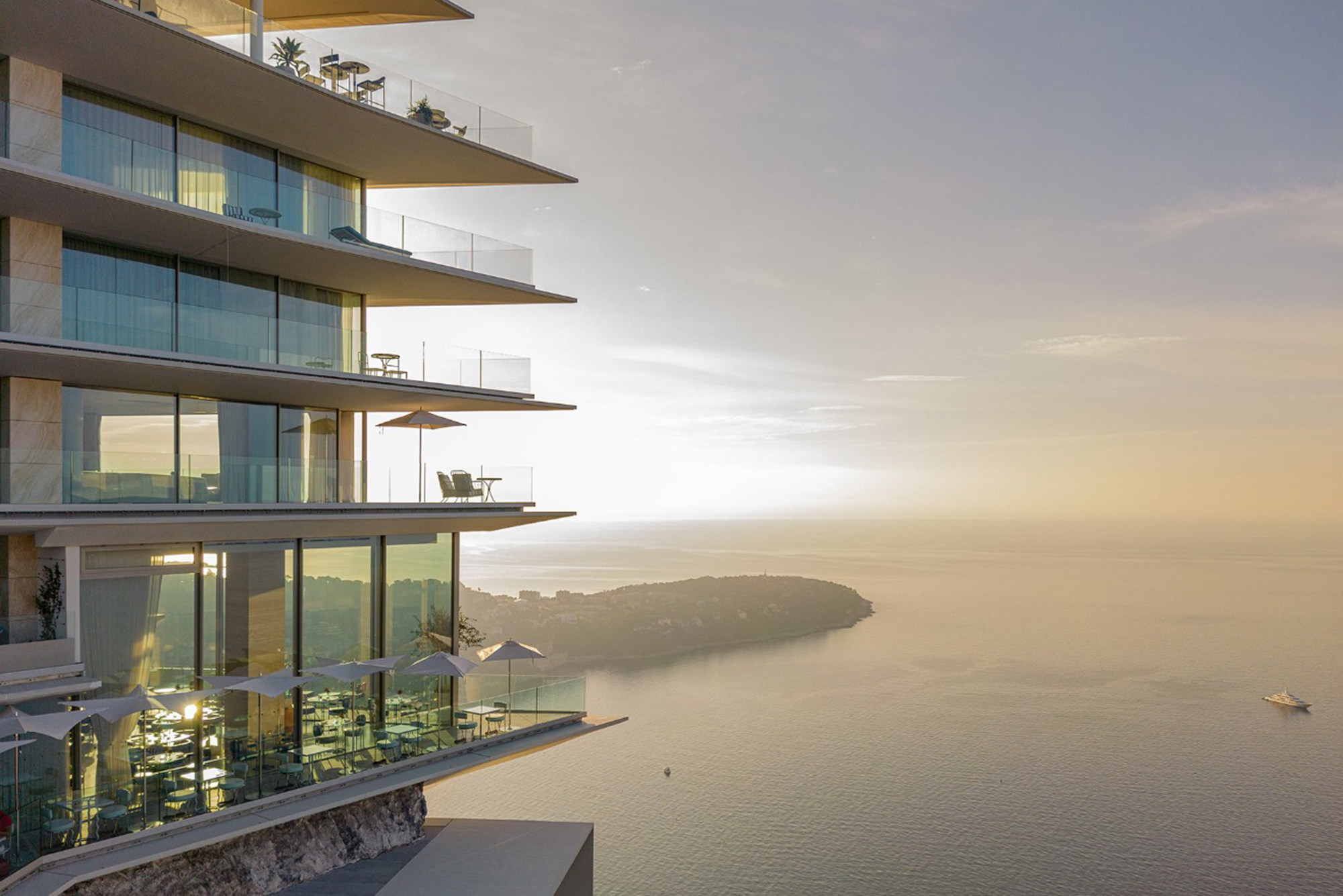
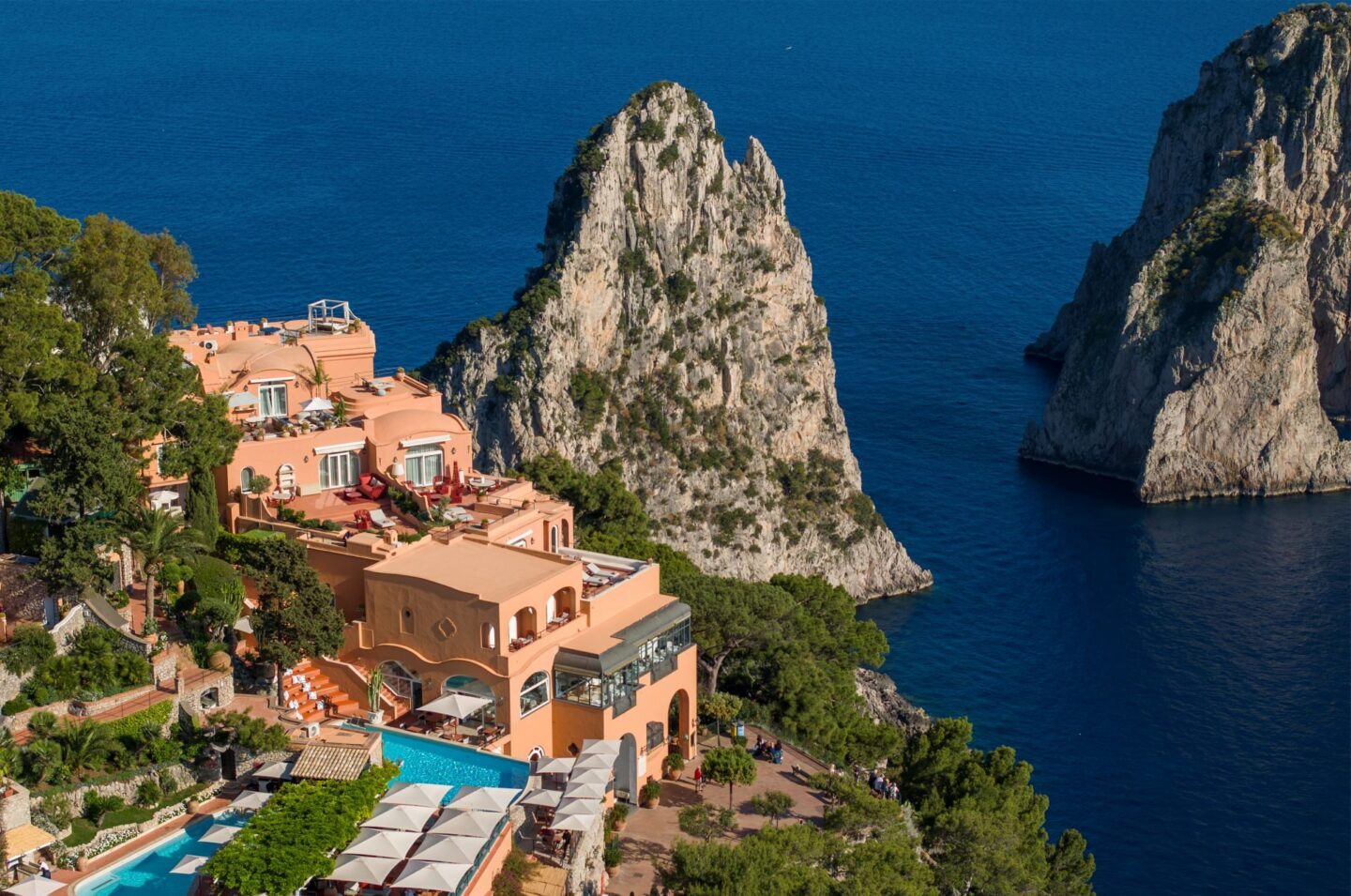
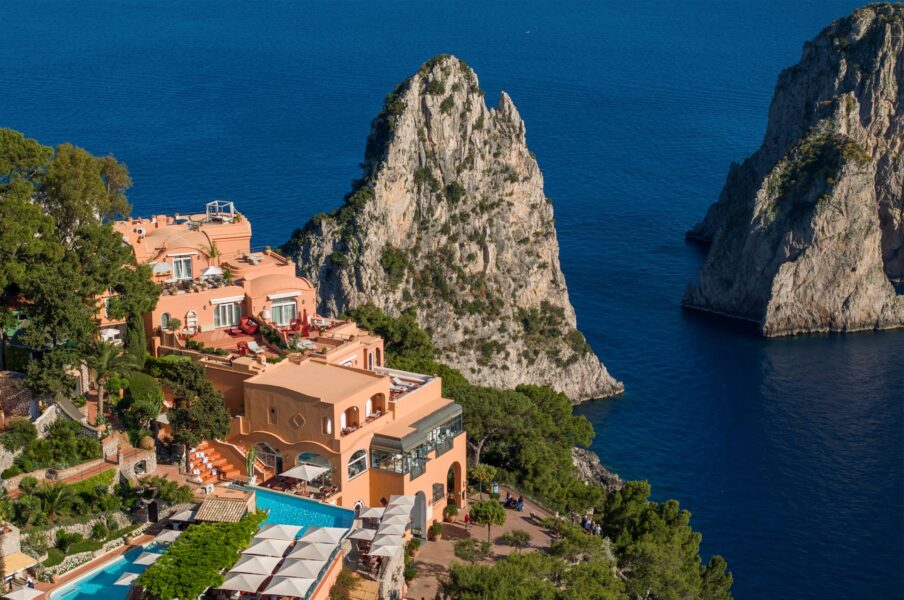
Suspended above the sea of Capri, between the scent of myrtle and the reflection of the waves breaking against the Faraglioni rocks, Hotel Punta Tragara embodies the very essence of the Mediterranean. Originally designed by Le Corbusier and today reinterpreted with contemporary care, the hotel is a place where time seems to slow down, leaving room for beauty — the natural beauty of the island and that crafted by human hands.
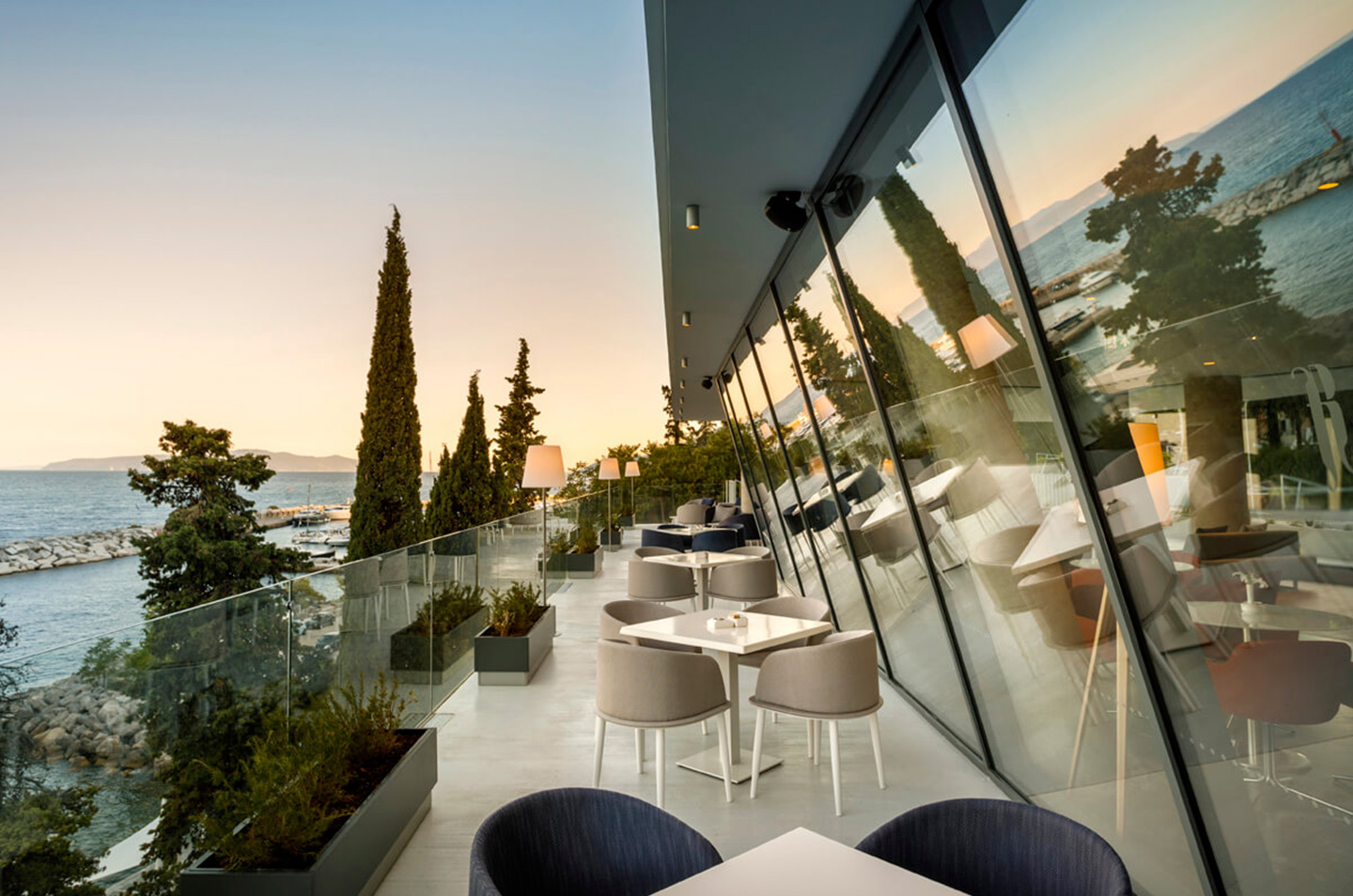
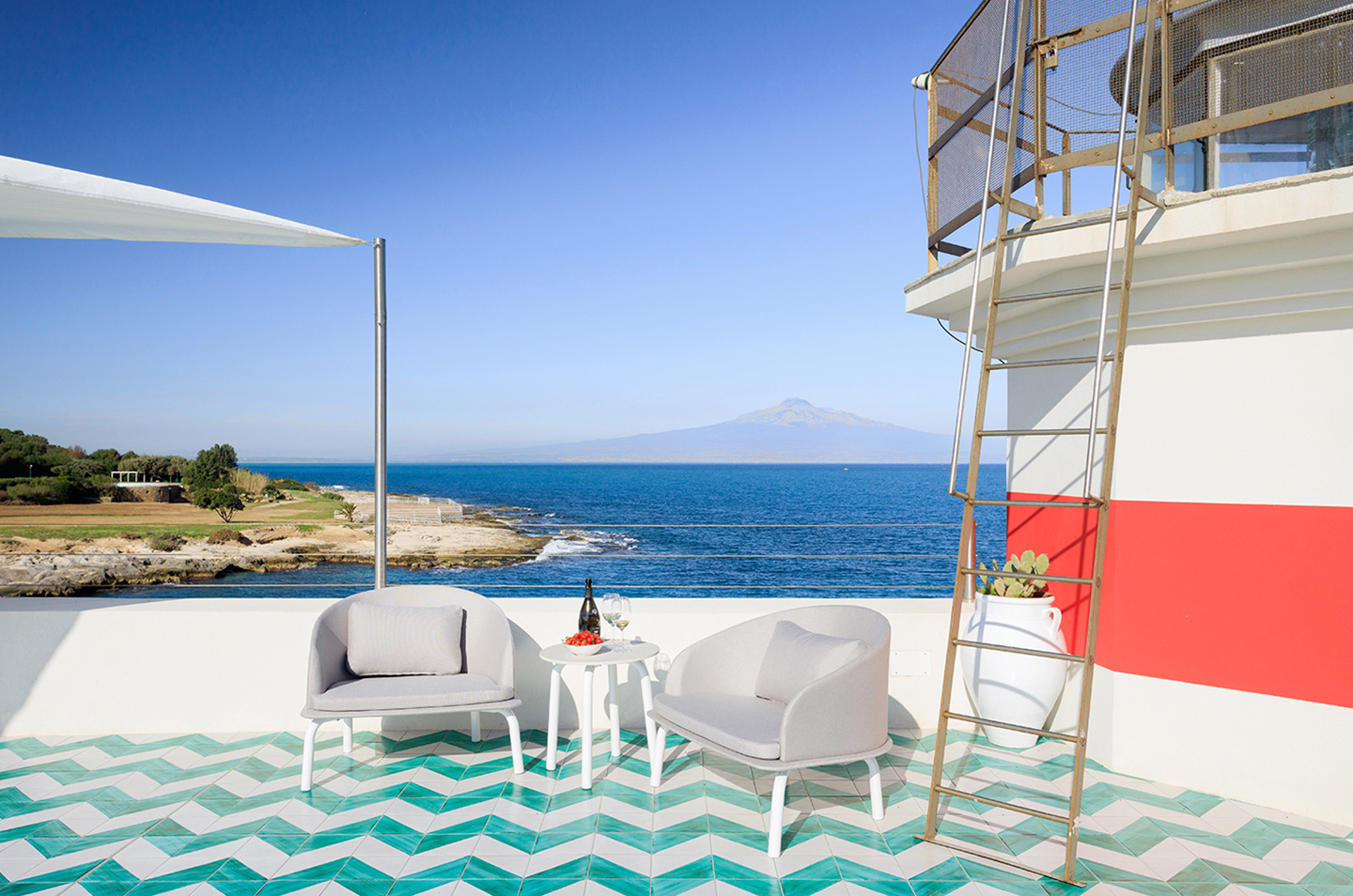
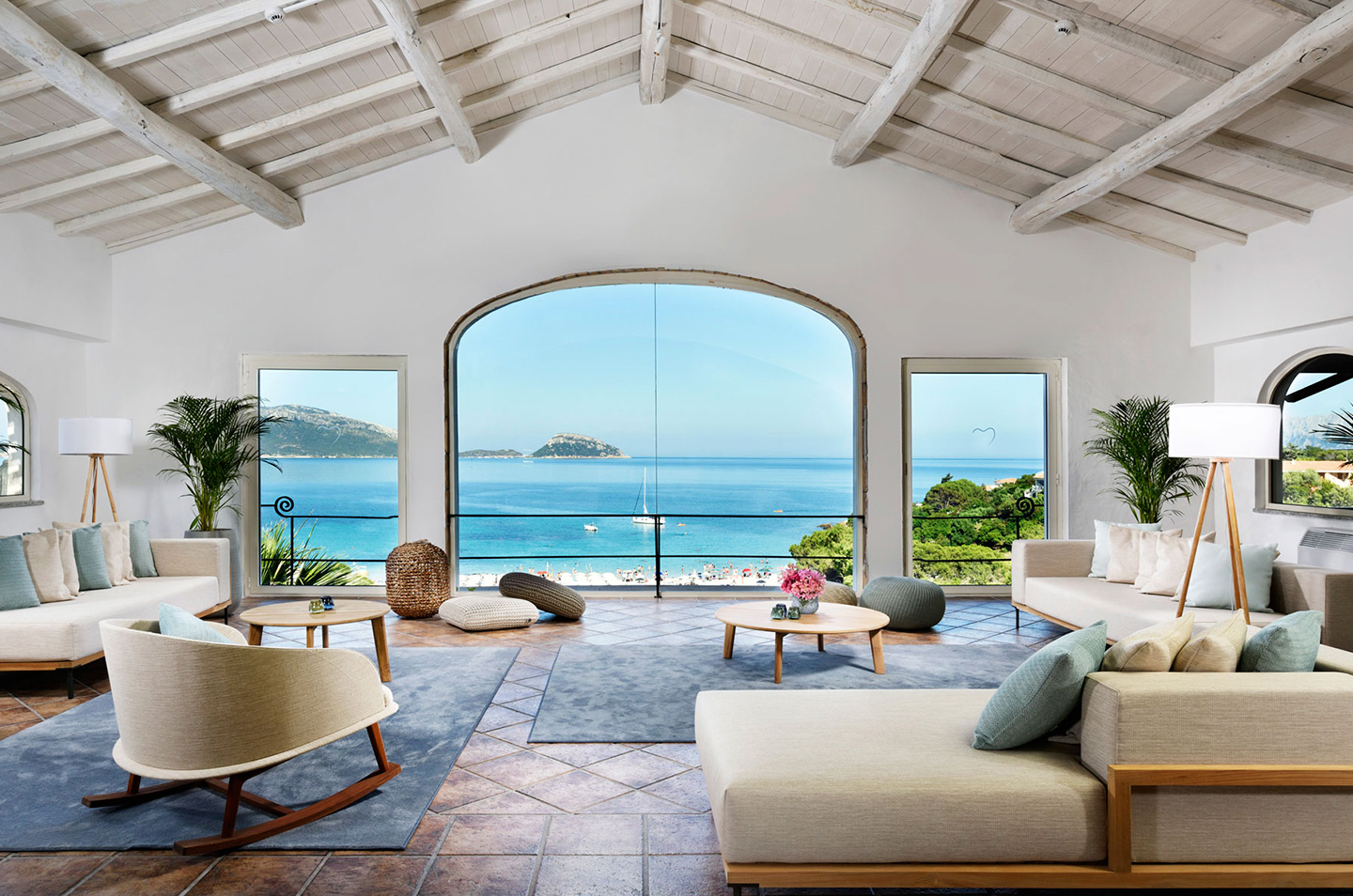
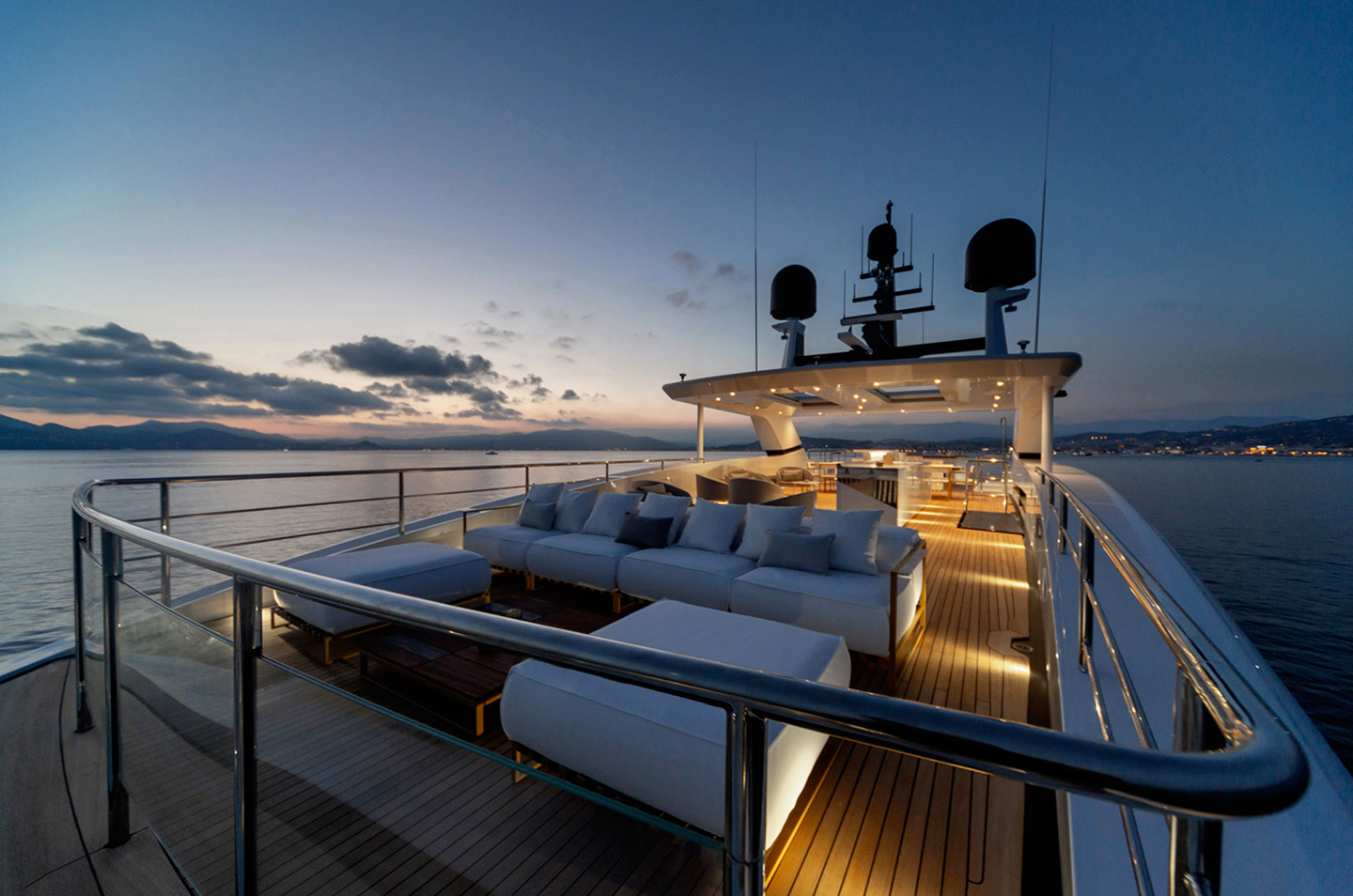
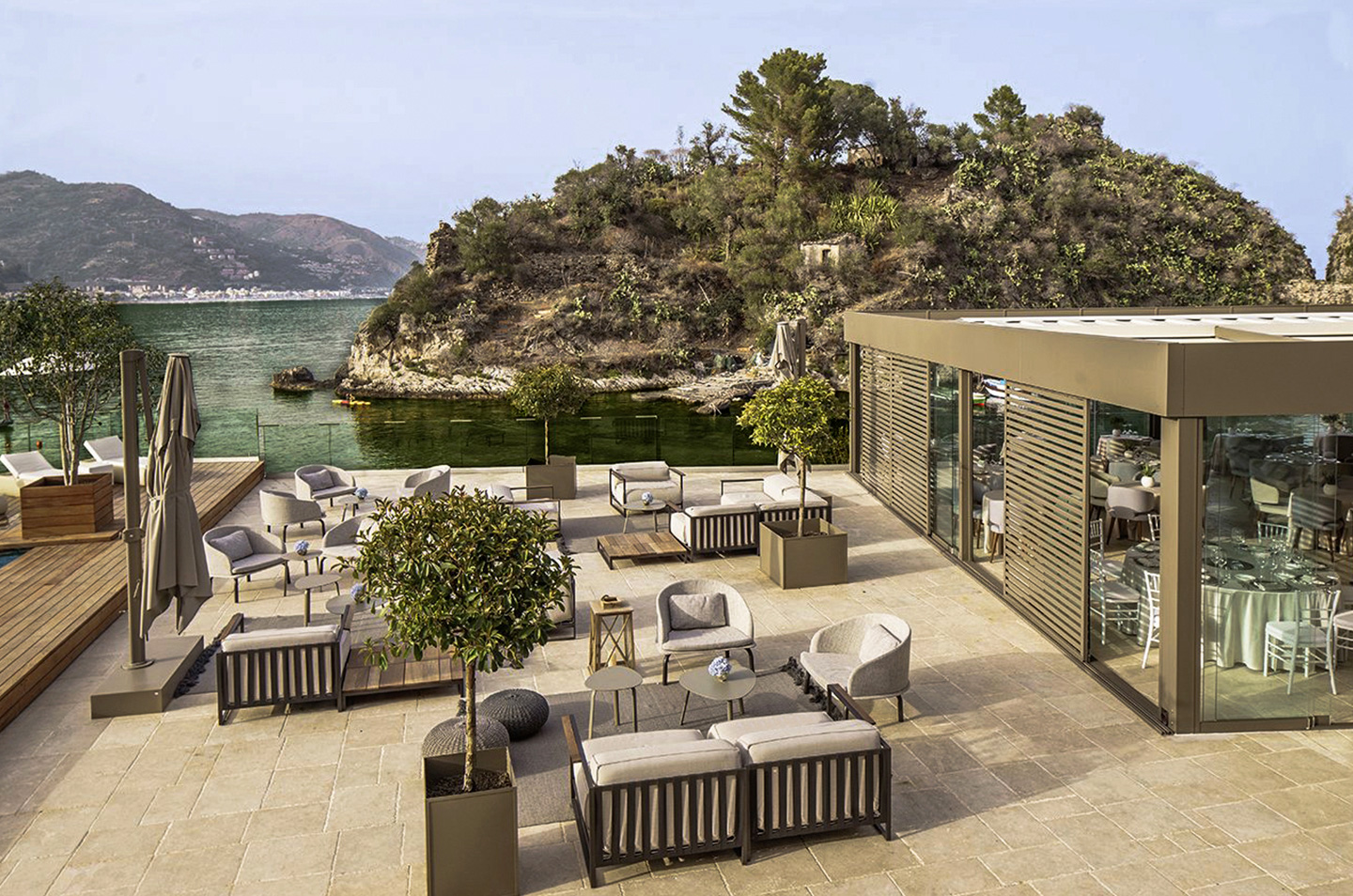
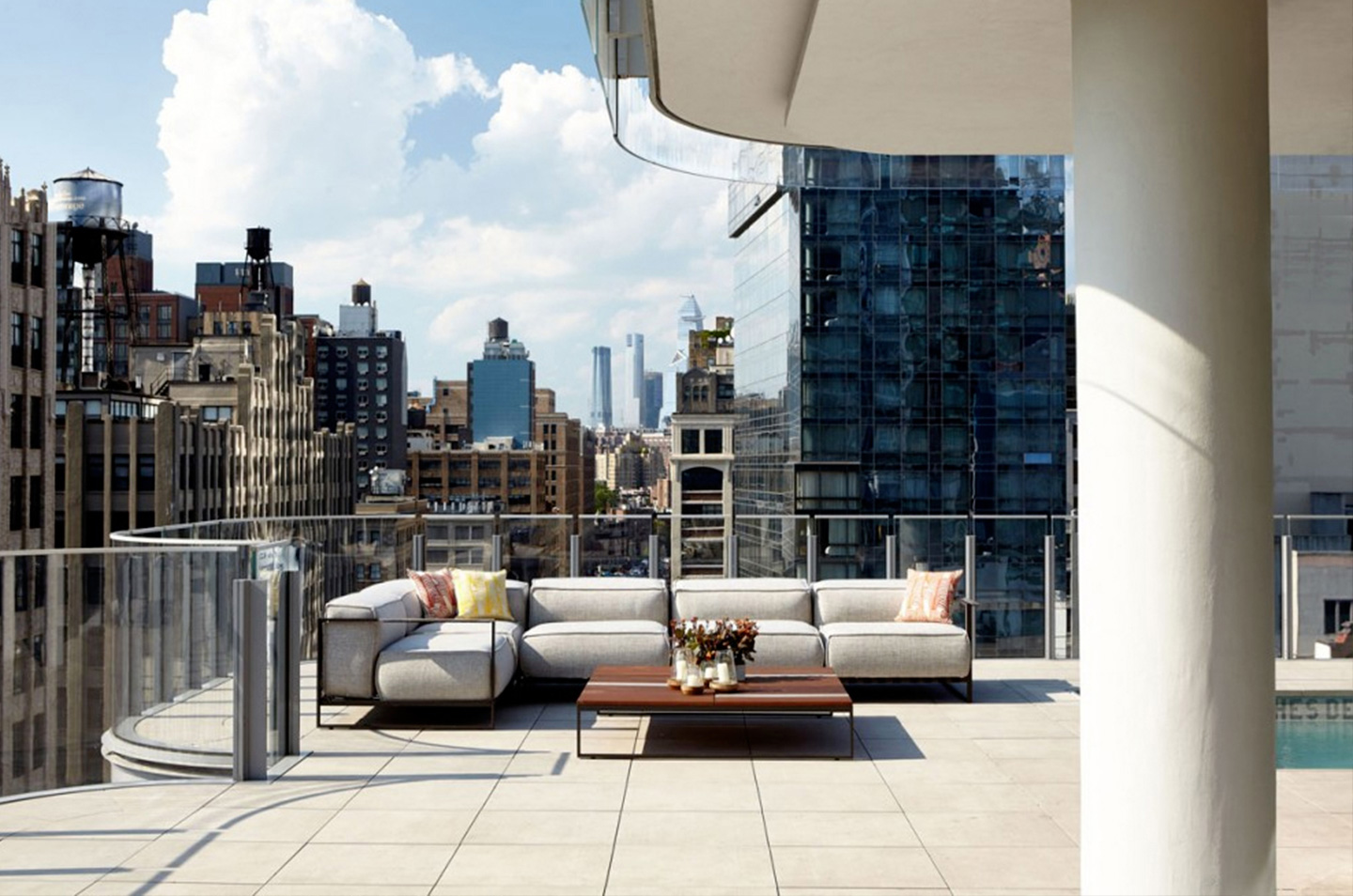
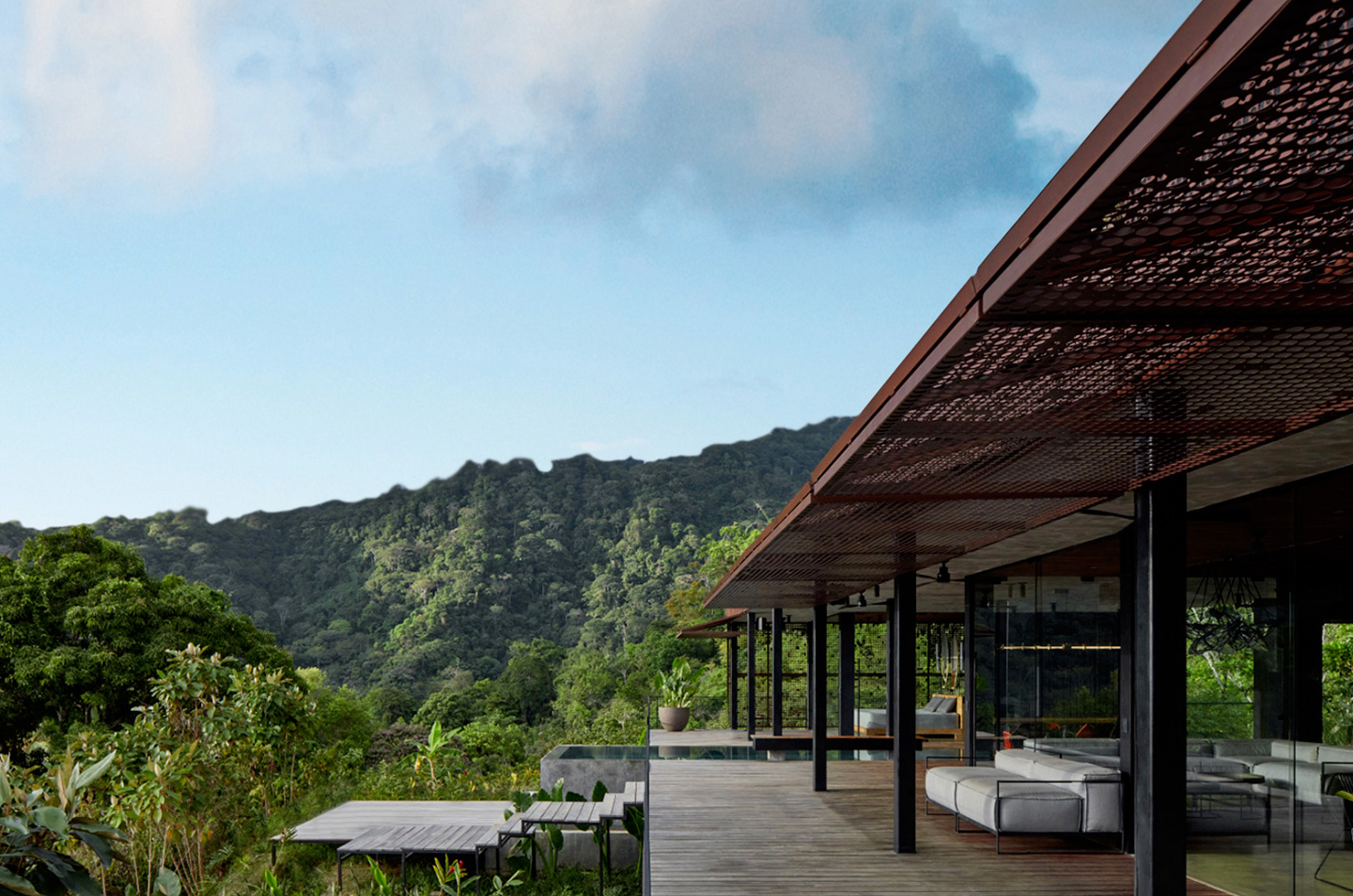
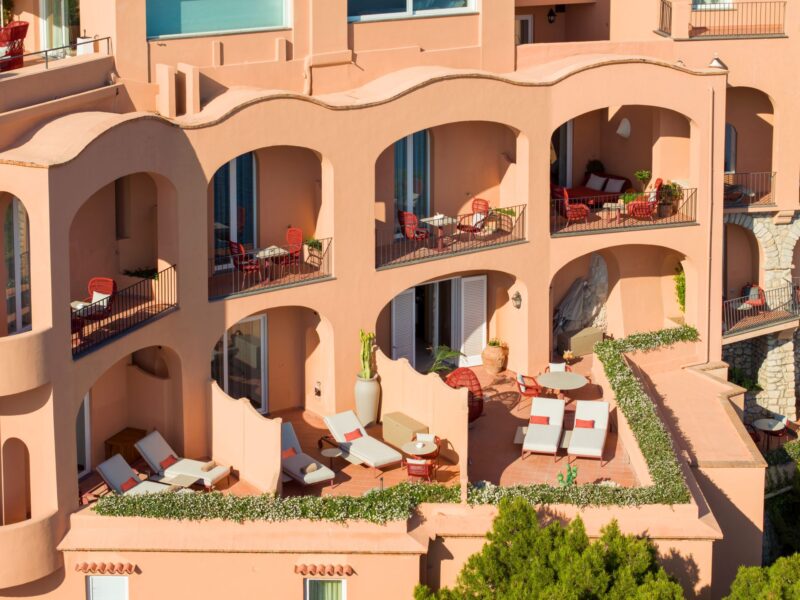
Every terrace, every room, every architectural detail speaks to the horizon. The peach-colored walls capture the sunlight and reflect it in shifting shades, while the private terraces open onto the deep blue of the sea, transforming into small stages for contemplation. It is here that Talenti enters the scene, with collections designed by Ludovica Serafini + Roberto Palomba and Marco Acerbis, to express a new idea of Mediterranean comfort: sophisticated yet authentic, elegant yet natural, in perfect harmony with the hotel’s architecture and the strength of the surrounding landscape. The project bears the signature of Loto AD Project, which curated the outdoor design with a unique sensitivity, blending Capri’s tradition with the language of contemporary design. The result is a poetic balance between material, color, and horizon: a story of light that becomes experience.
Panama and Cliff – The Embrace of the Sun
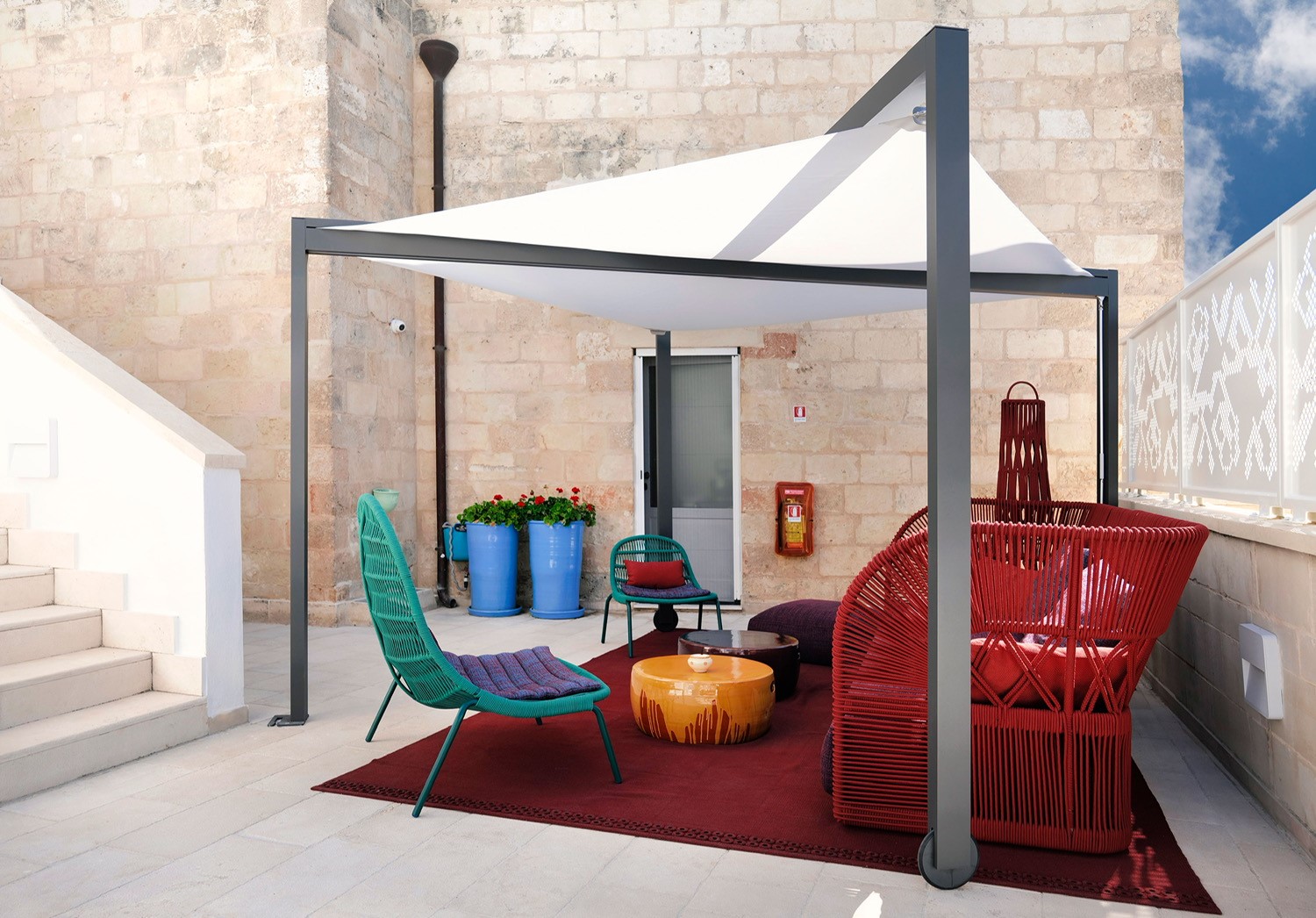
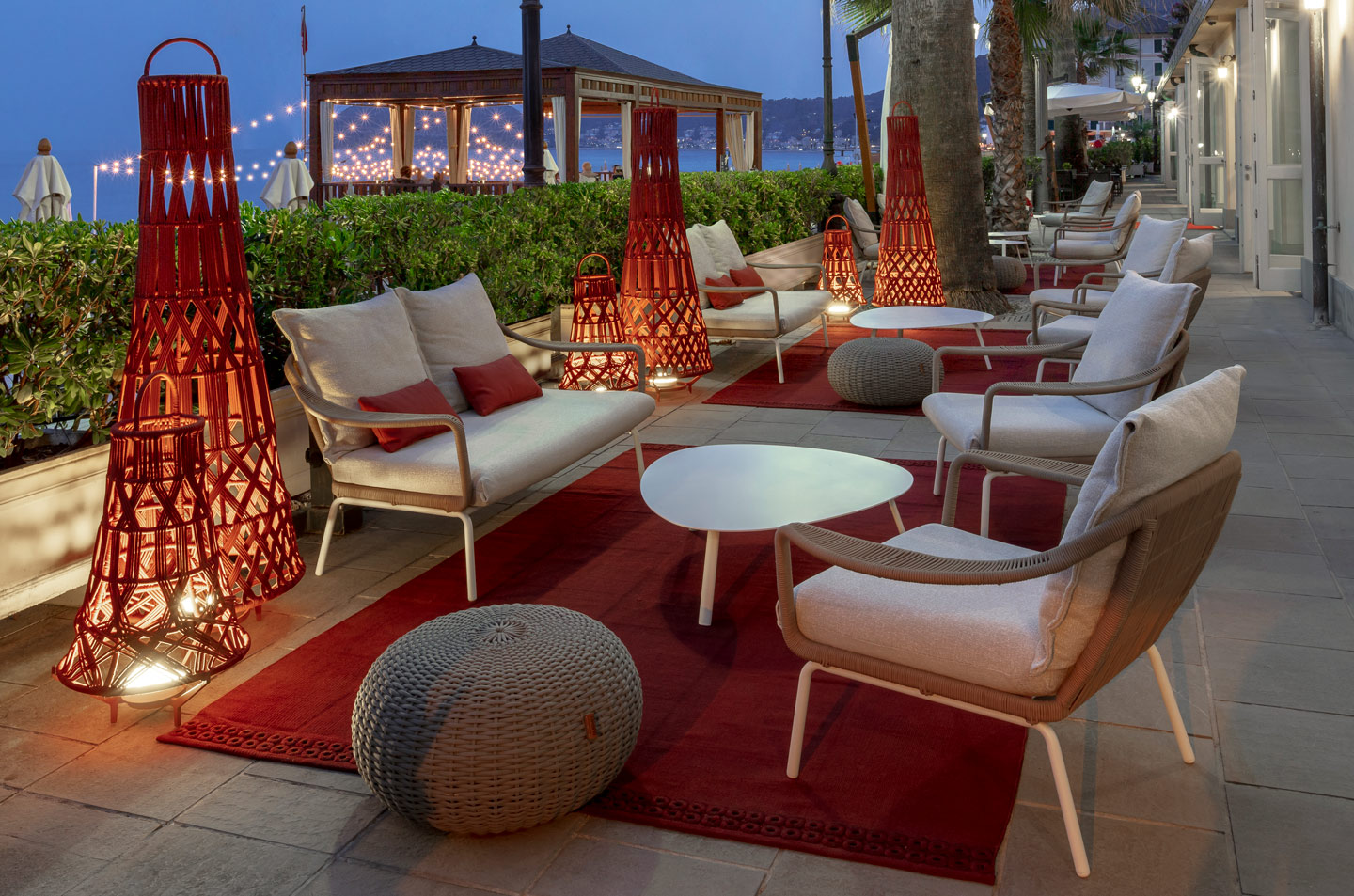
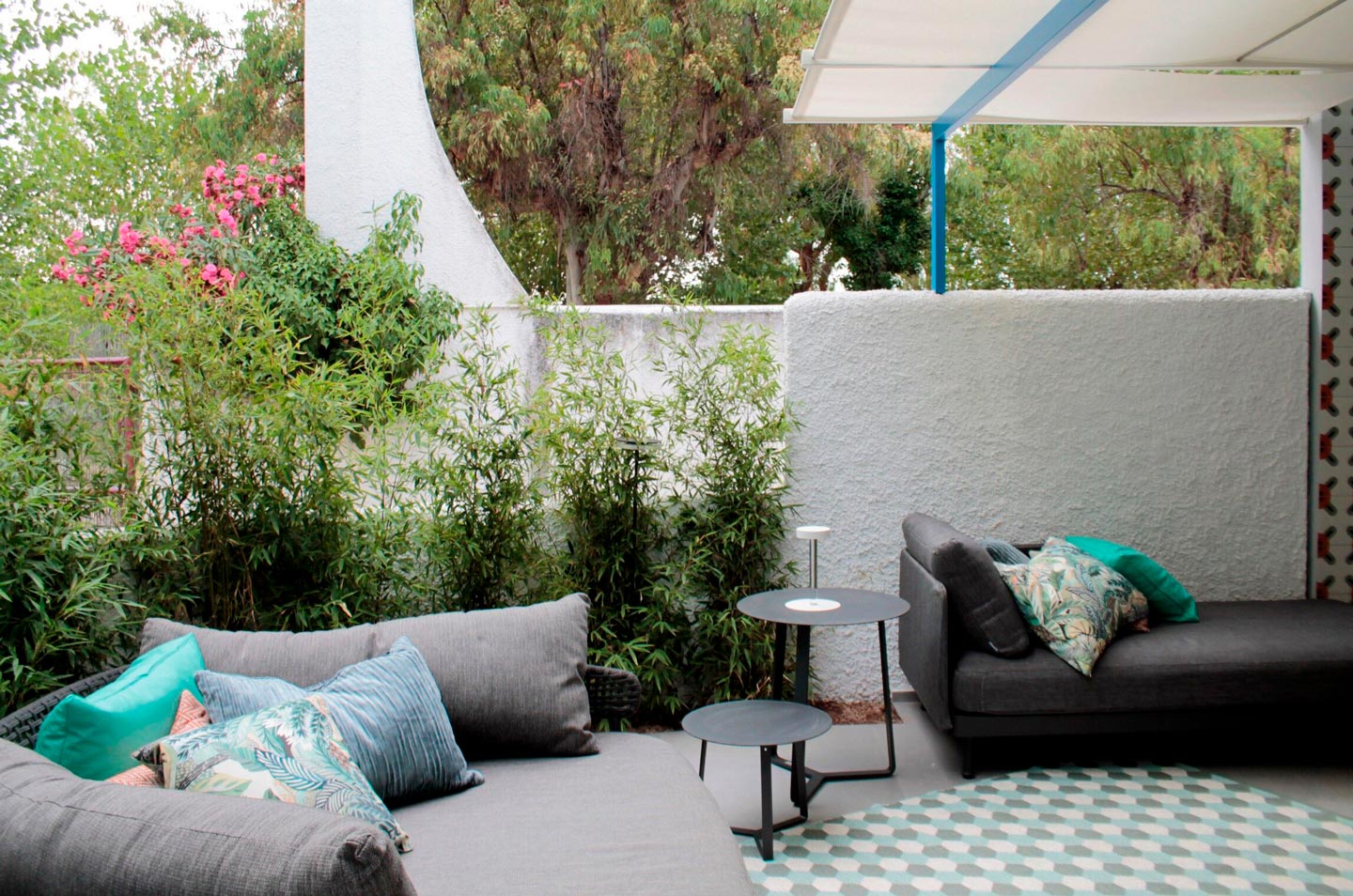
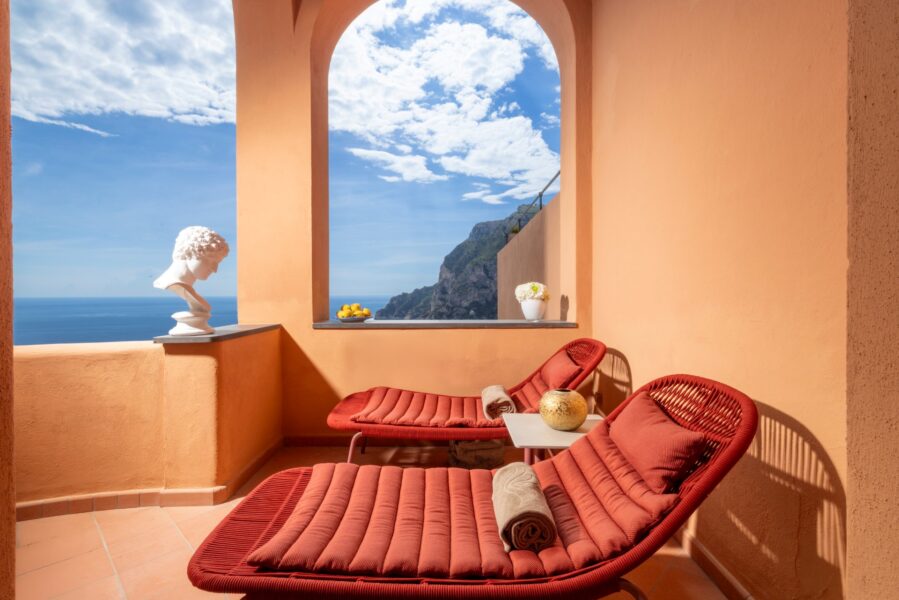
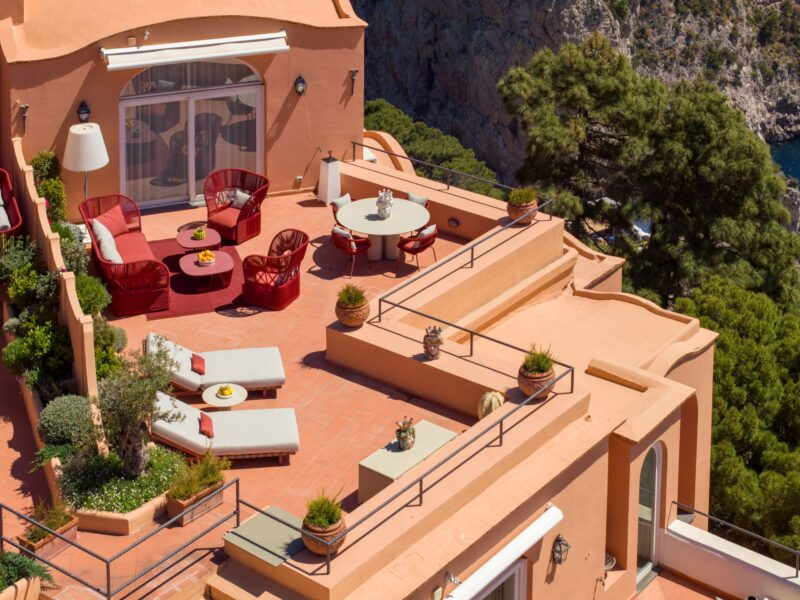
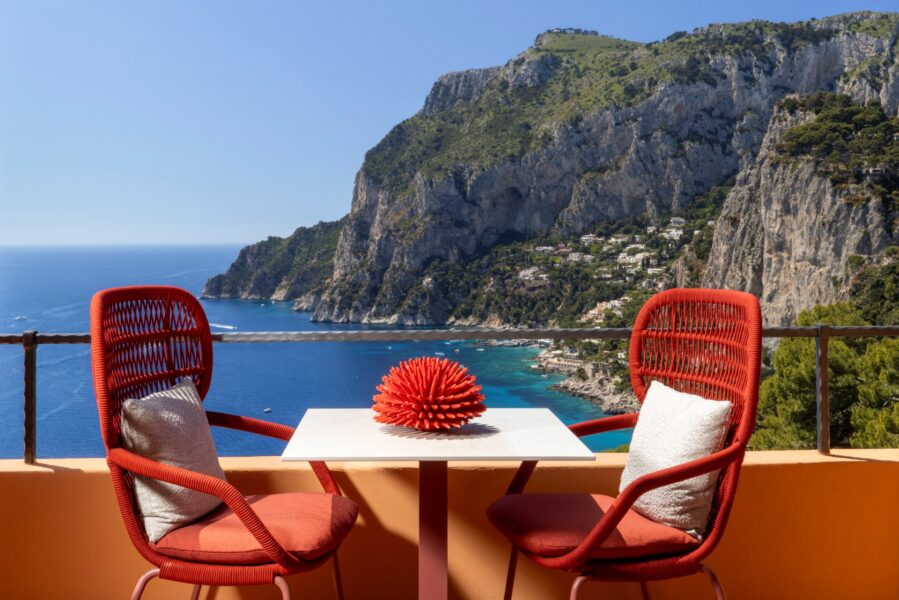
On the private terraces of the rooms, the Panama collection by Ludovica Serafini + Roberto Palomba gracefully interprets the island’s slow rhythm. The seats, woven in terracotta-colored cords, blend with the warm tones of the plaster and the deep green of the maritime pines, while the gaze drifts between the lines of sea and sky. Panama was born from the idea of capturing the vibration of Mediterranean light and translating it into enveloping, organic forms. The powder-coated aluminum frame, light yet durable, supports hand-woven backs and armrests in a gesture that recalls the ancient craft of marine basketry.
Each thread is a note, each knot a pause: a visual and tactile rhythm that follows the sun from dawn to dusk. The cushions, covered in water-repellent and breathable fabrics, offer deep and sensual comfort. The color palette — between burnt red and bordeaux — is never bright but velvety, like the earth of Capri after the rain.
Sitting on a Panama armchair means embracing the landscape: the horizon becomes the frame for a timeless calm, where luxury is made of silence and light. The terraces furnished with Panama are small lounges suspended above the sea.
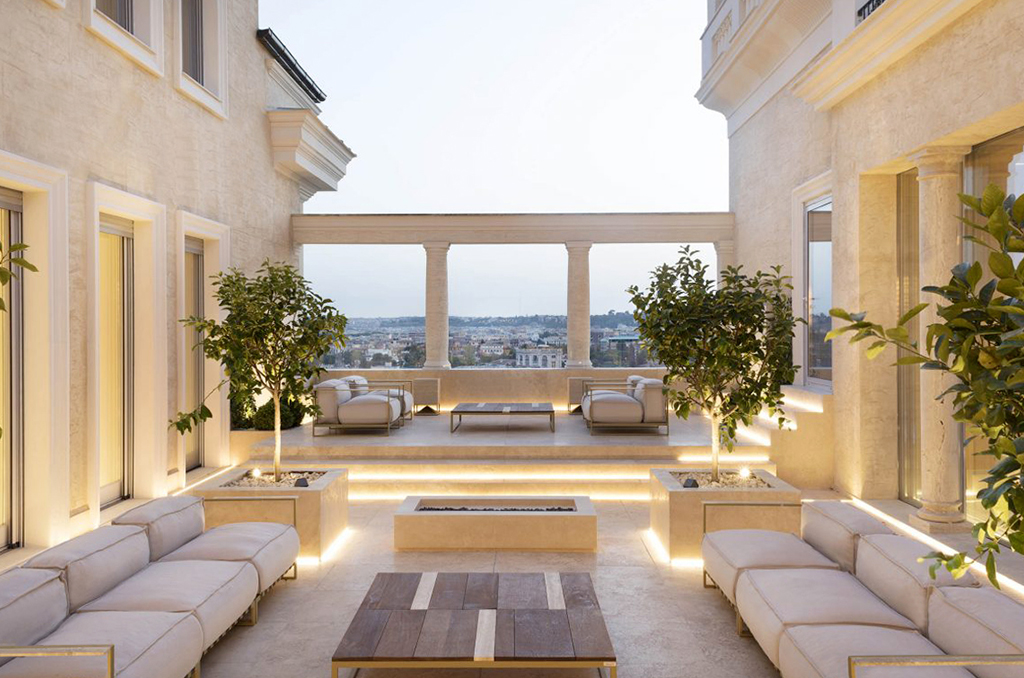
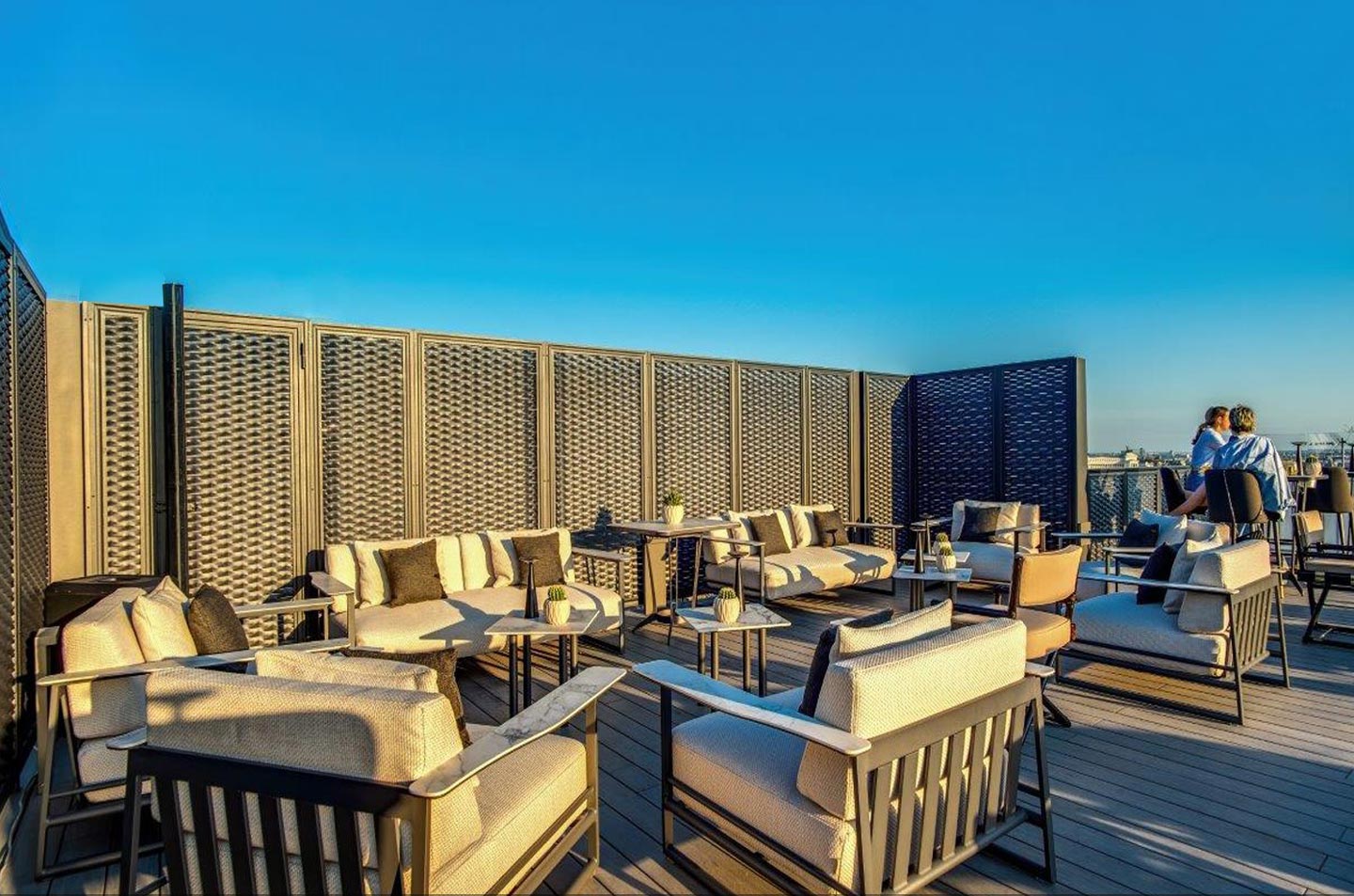
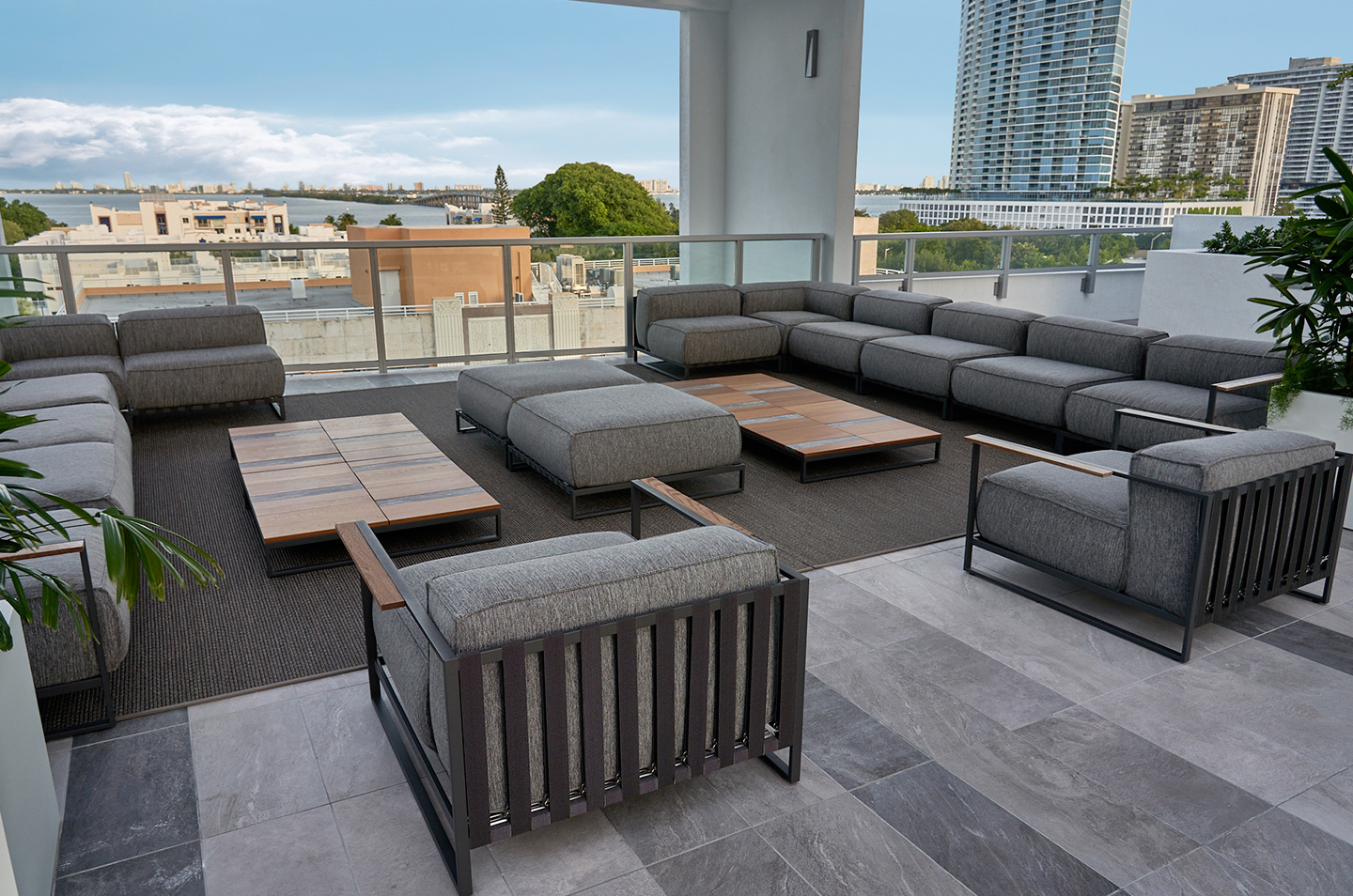
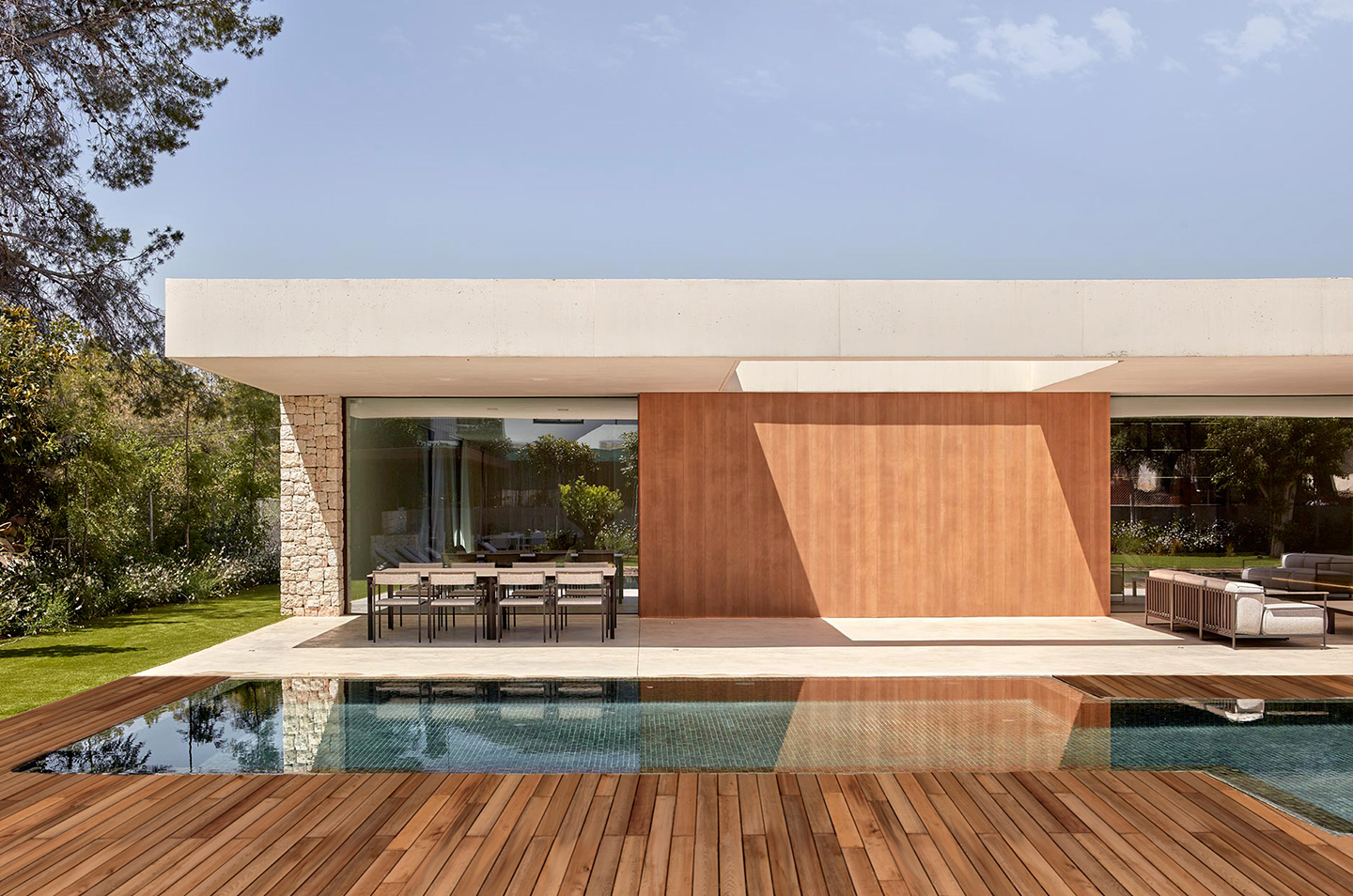
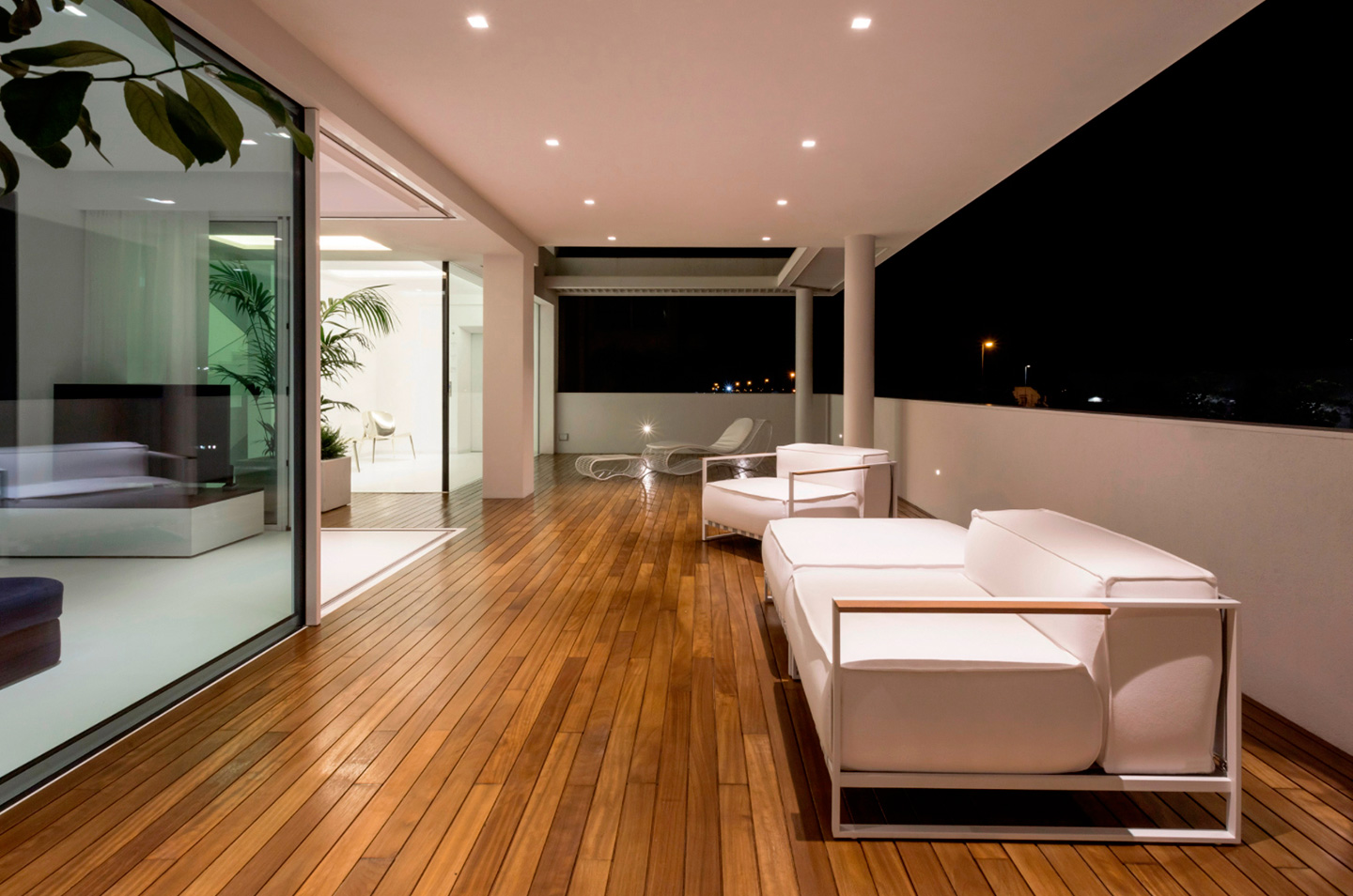
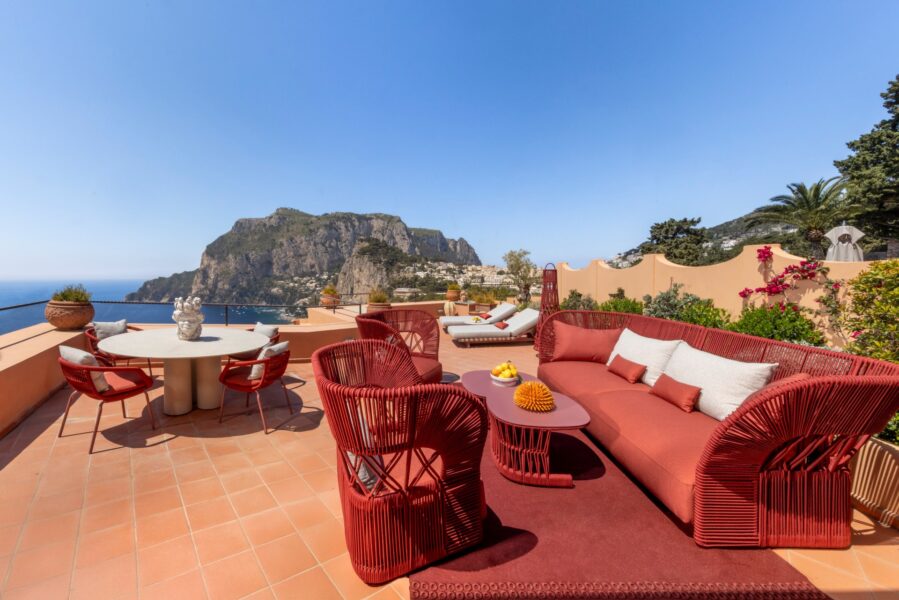
Light aluminum tables with stoneware tops interact with the seating in a play of balanced proportions, completed by natural-textured cushions that soften the surfaces and invite relaxation. The overall effect is one of refined equilibrium: a design that does not impose but accompanies the beauty of the place, allowing the light to set the rhythm. On the large panoramic terrace overlooking the hotel, the Cliff collection, also by Ludovica Serafini + Roberto Palomba, creates a living area with a bold yet welcoming character.
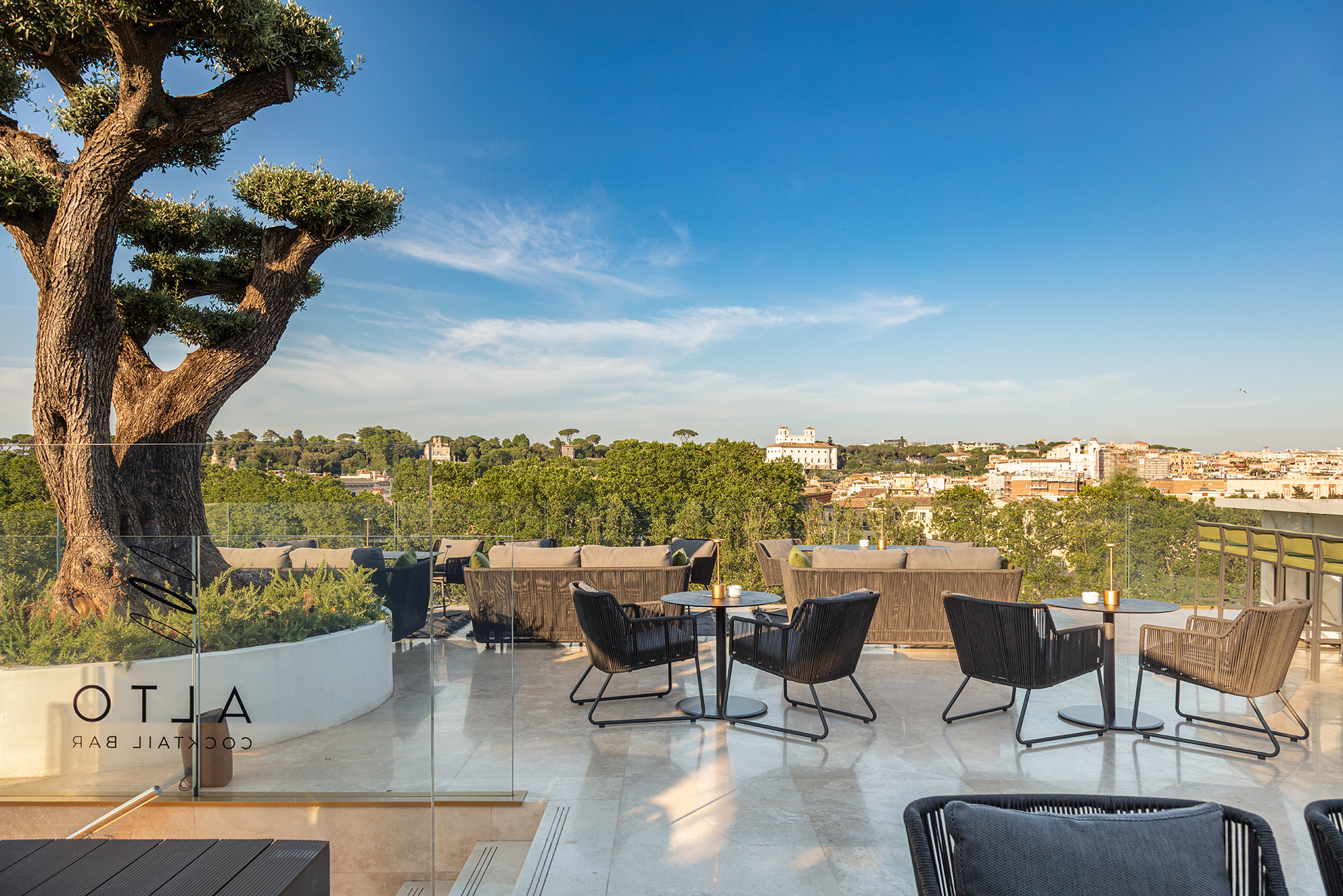
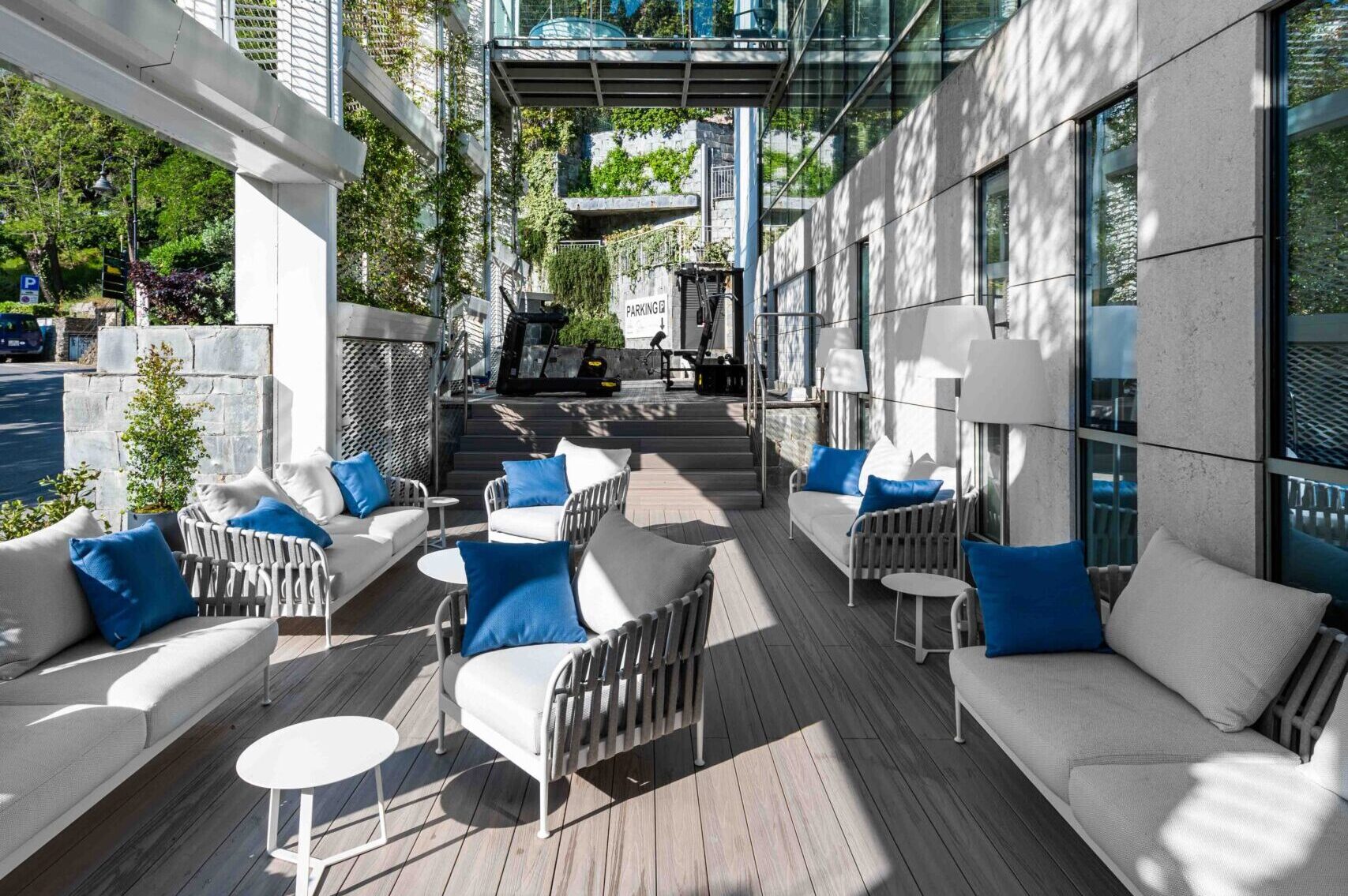
The sofa, with its generous proportions, becomes the convivial heart of the space.
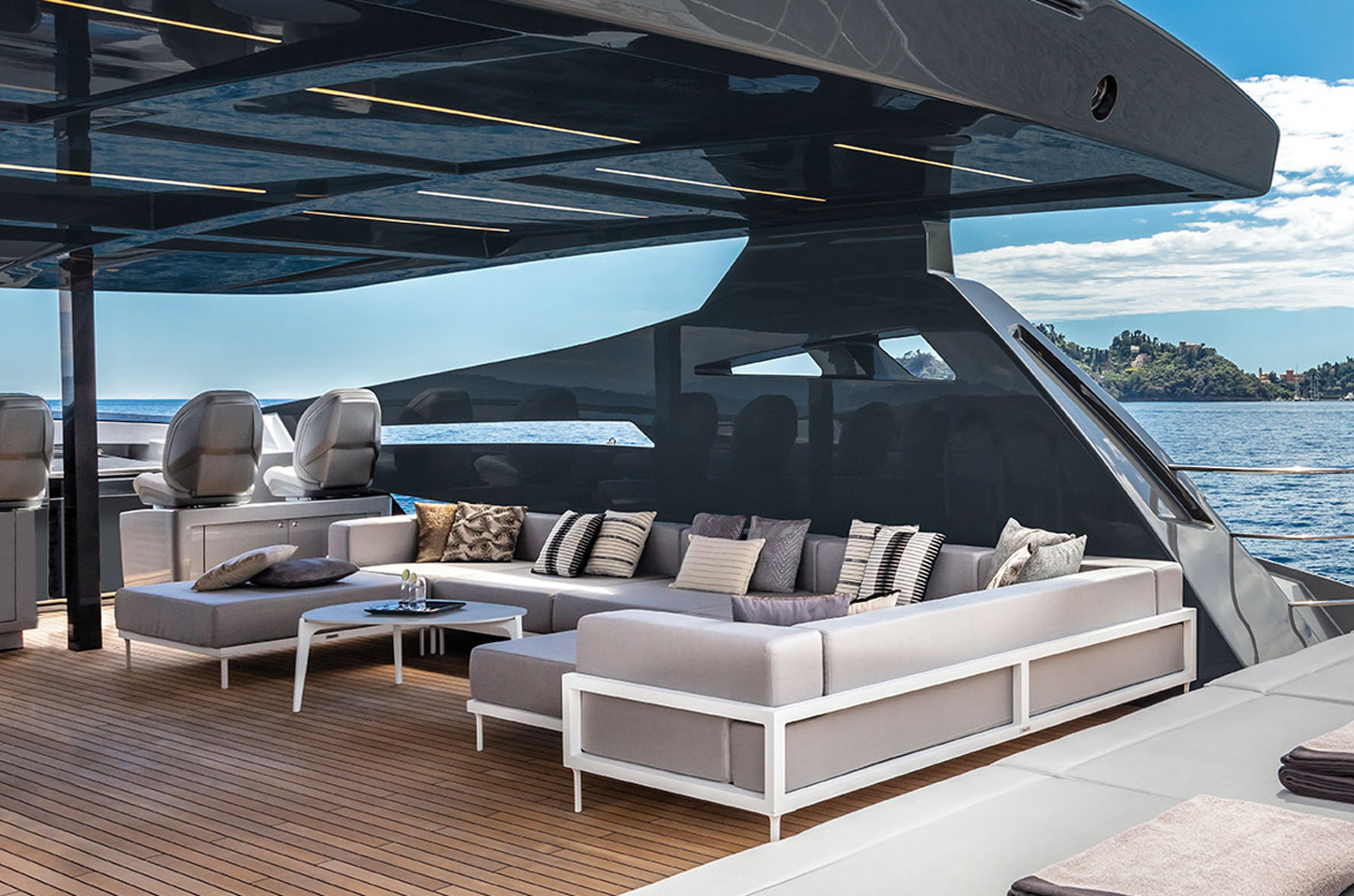
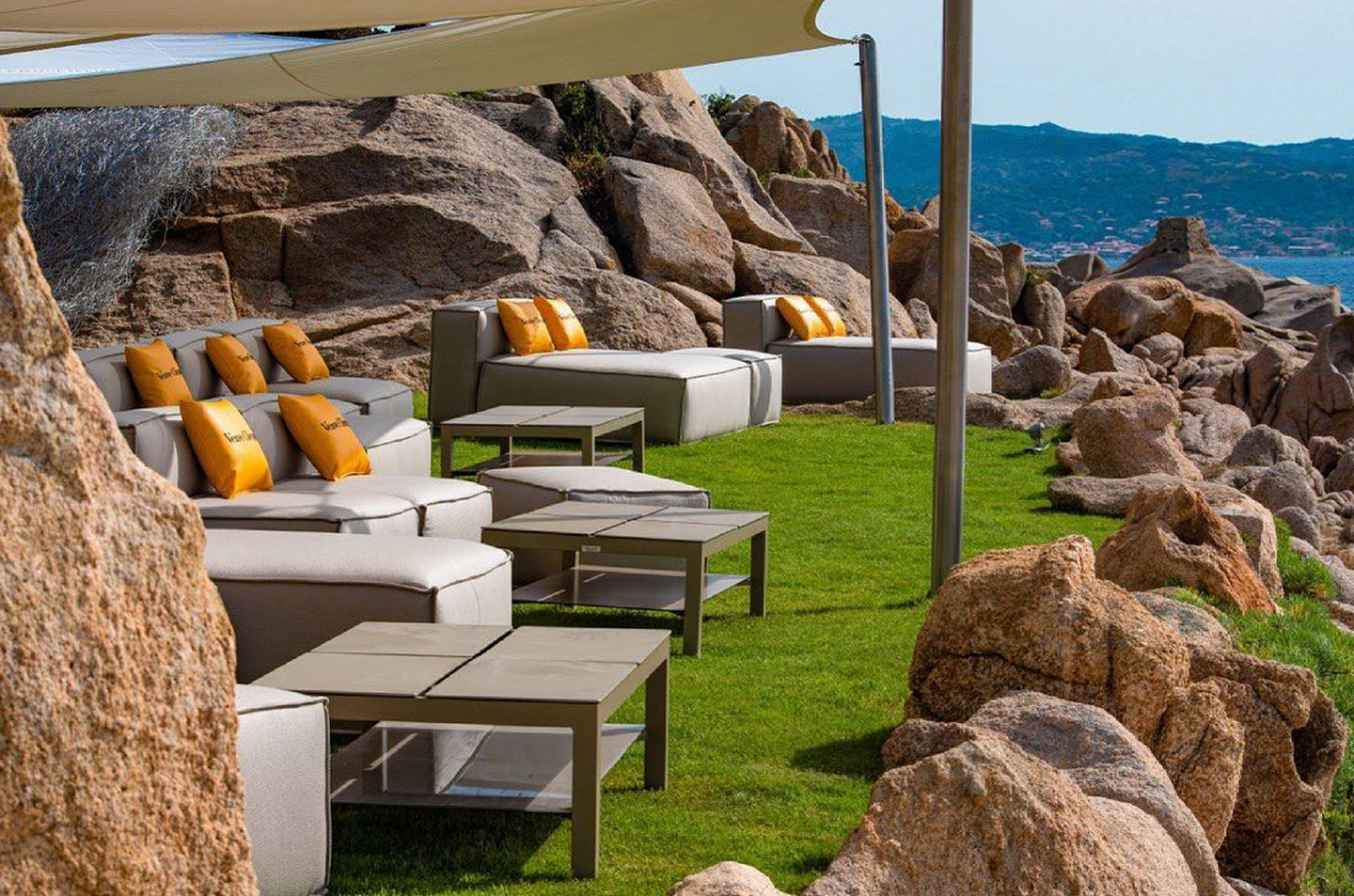
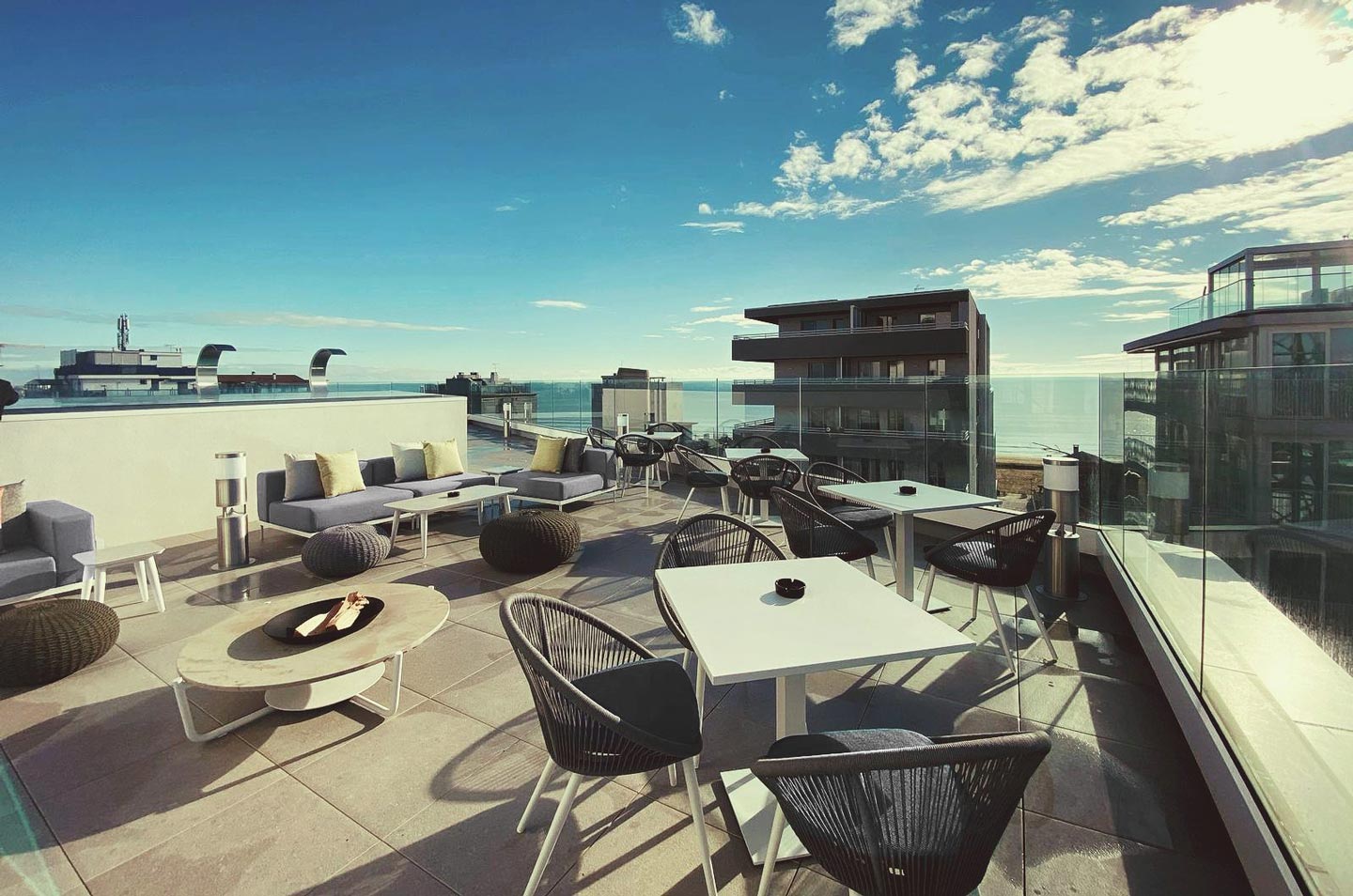
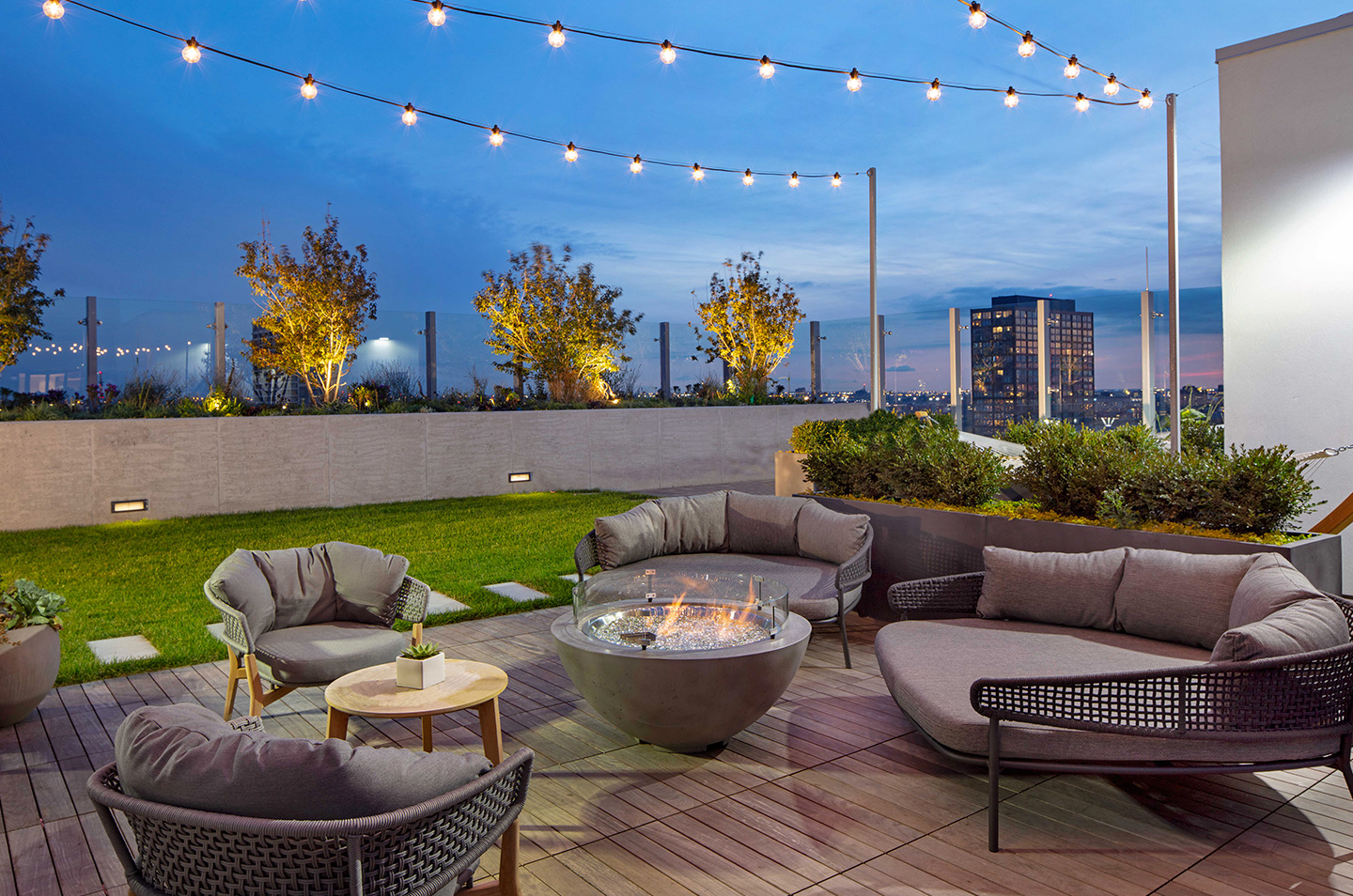
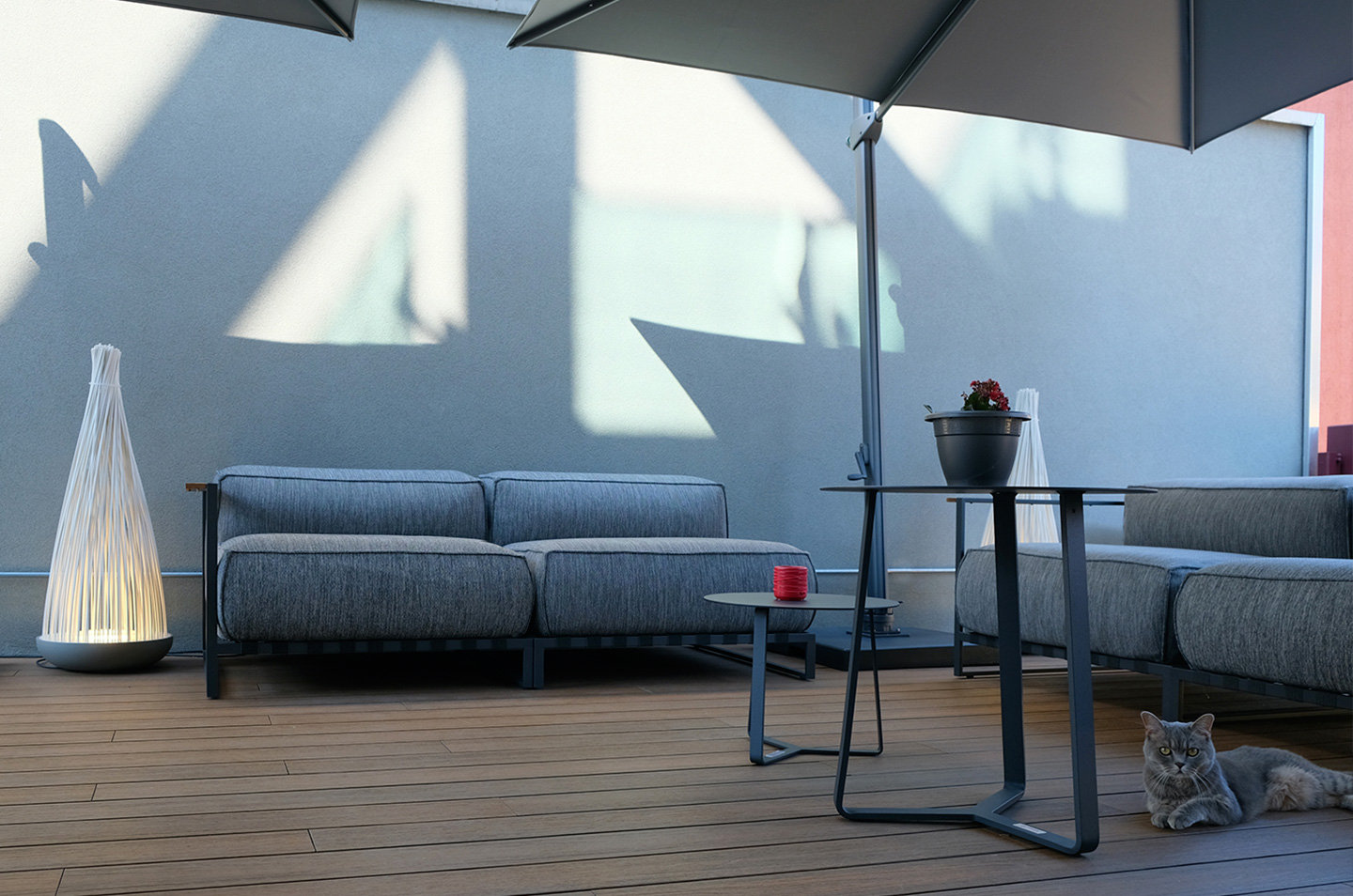
Cords, skillfully woven around the aluminum frame, define an architectural rhythm reminiscent of the movement of waves, while the large, soft cushions embrace the body naturally. The color palette echoes Panama, yet in deeper tones: reds grow more intense, greys more mineral, blending into Capri’s rocky landscape. Around the sofa, sculptural coffee tables complete the composition, balancing intimacy and openness.
It is a place of meeting and stillness, where design becomes the stage for the light of the sunset and for conversations that stretch into the night. In Cliff, the creative vision of Serafini + Palomba reaches a perfect synthesis between architecture and comfort.
Every element, from the detail of the weave to the volume of the cushions, arises from a functional yet poetic thought: to build a space of lived beauty, where man and landscape exist in harmony.
Leaf – Design That Breathes
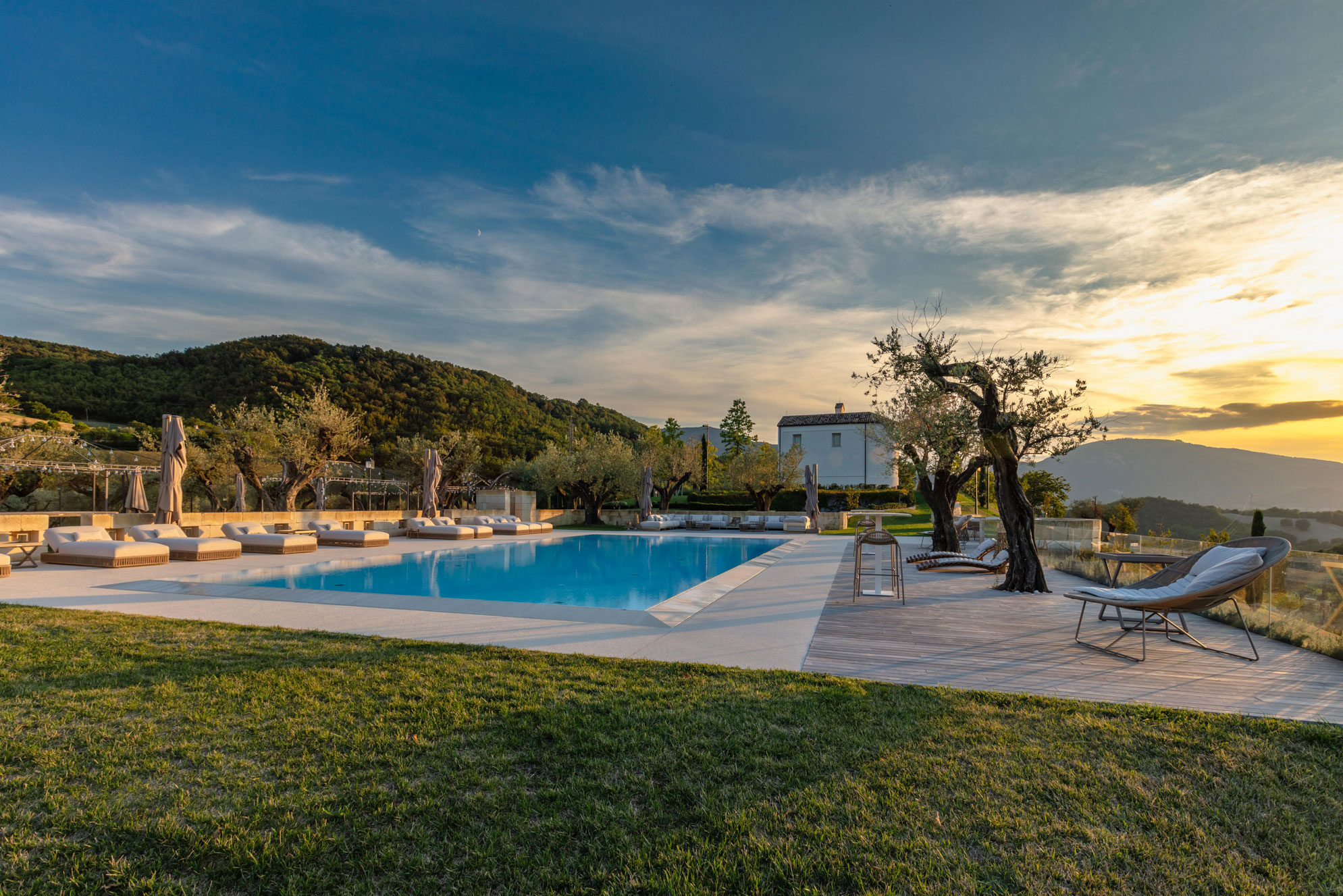
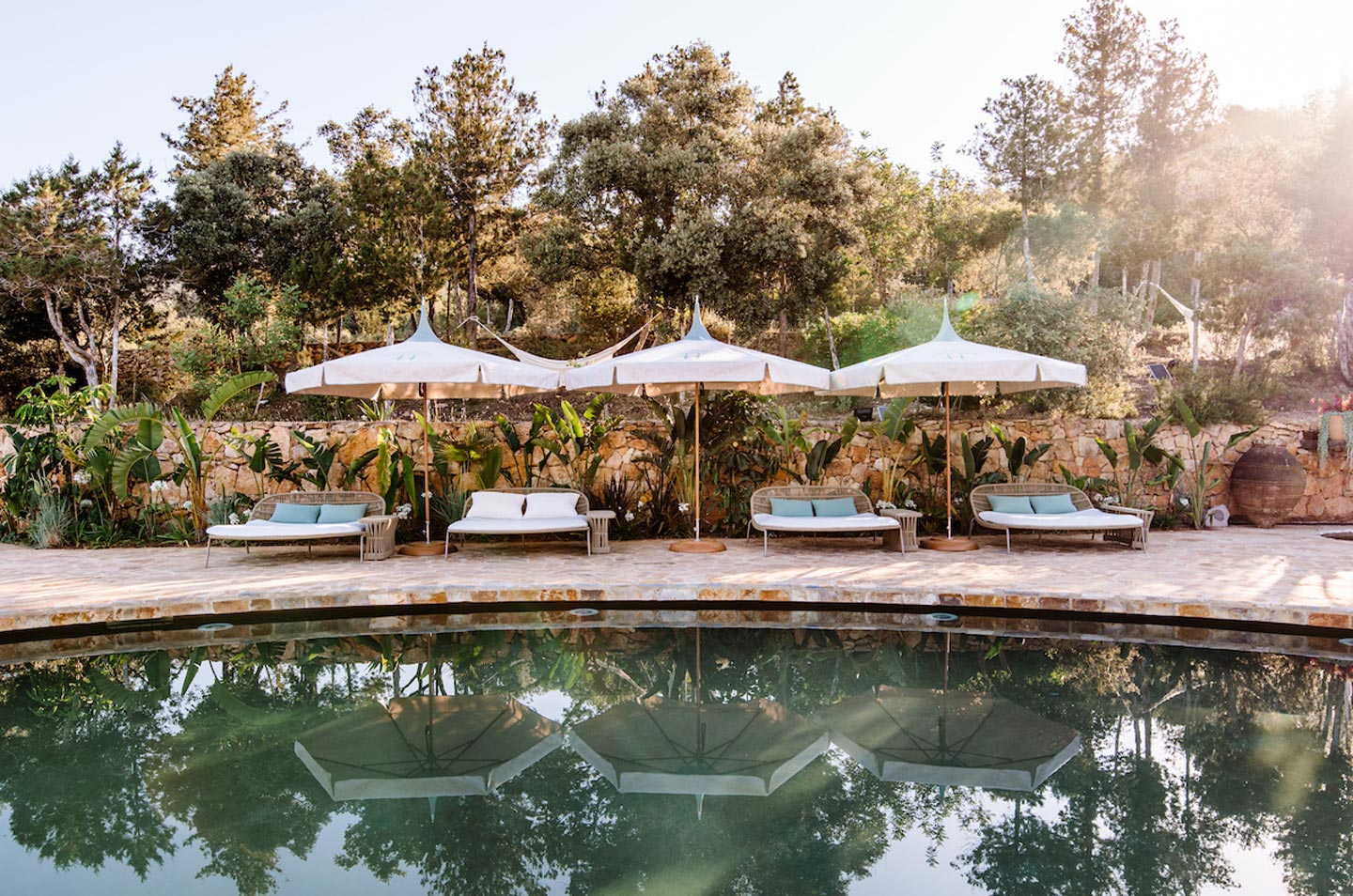
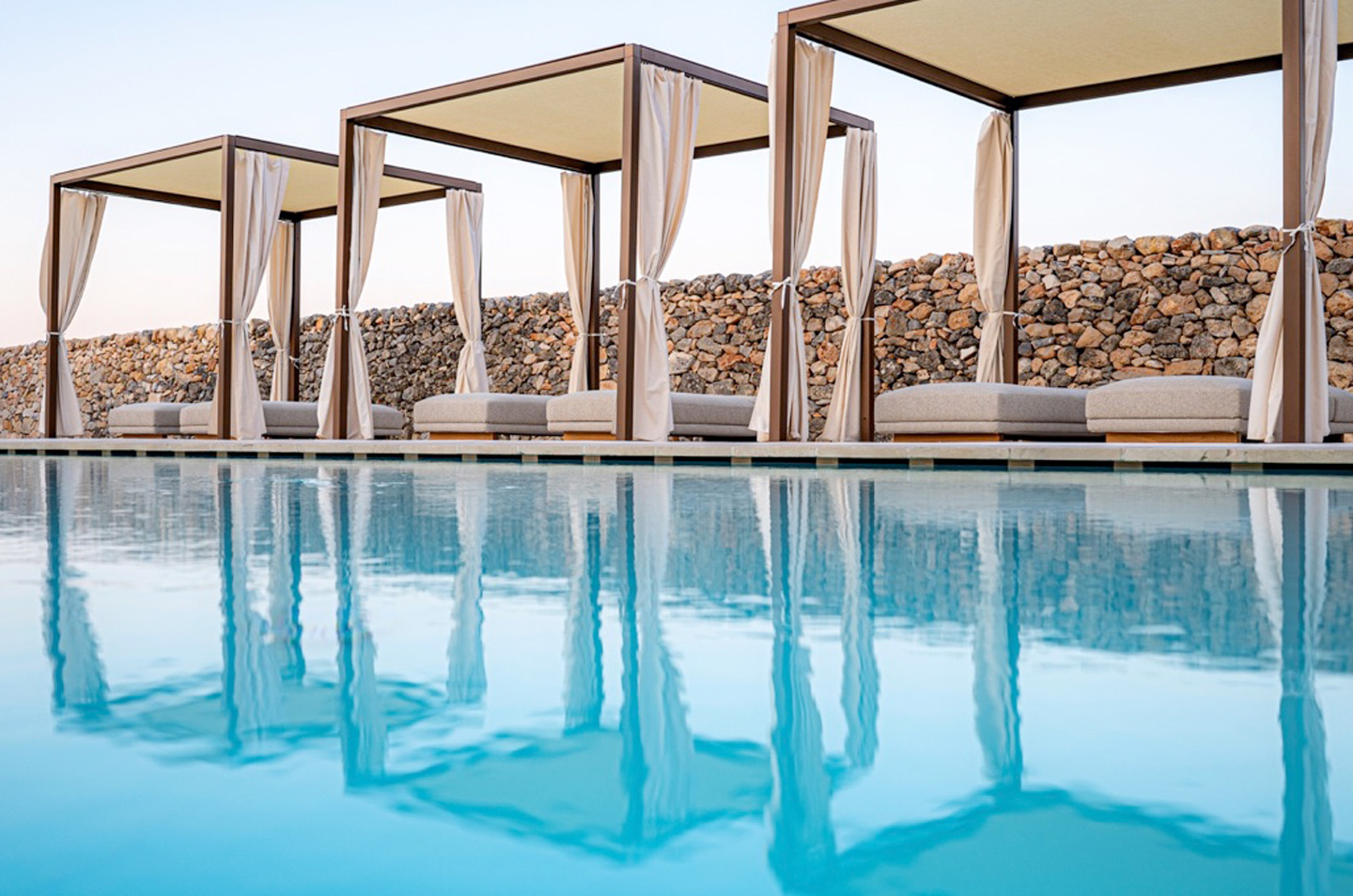
On the hotel’s most panoramic levels, beside the ancient stone walls overlooking the Faraglioni, lie the Leaf loungers by Marco Acerbis.
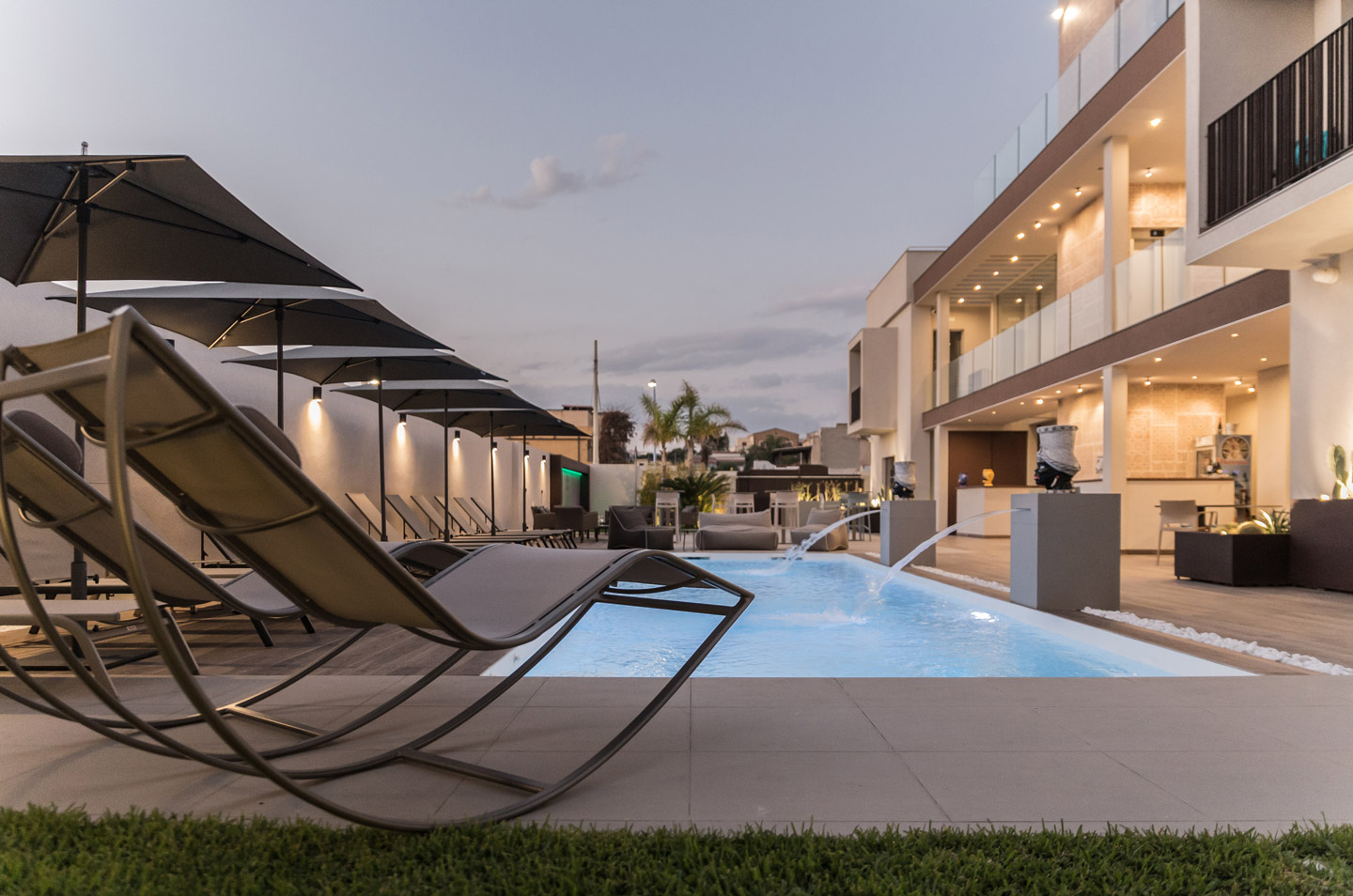
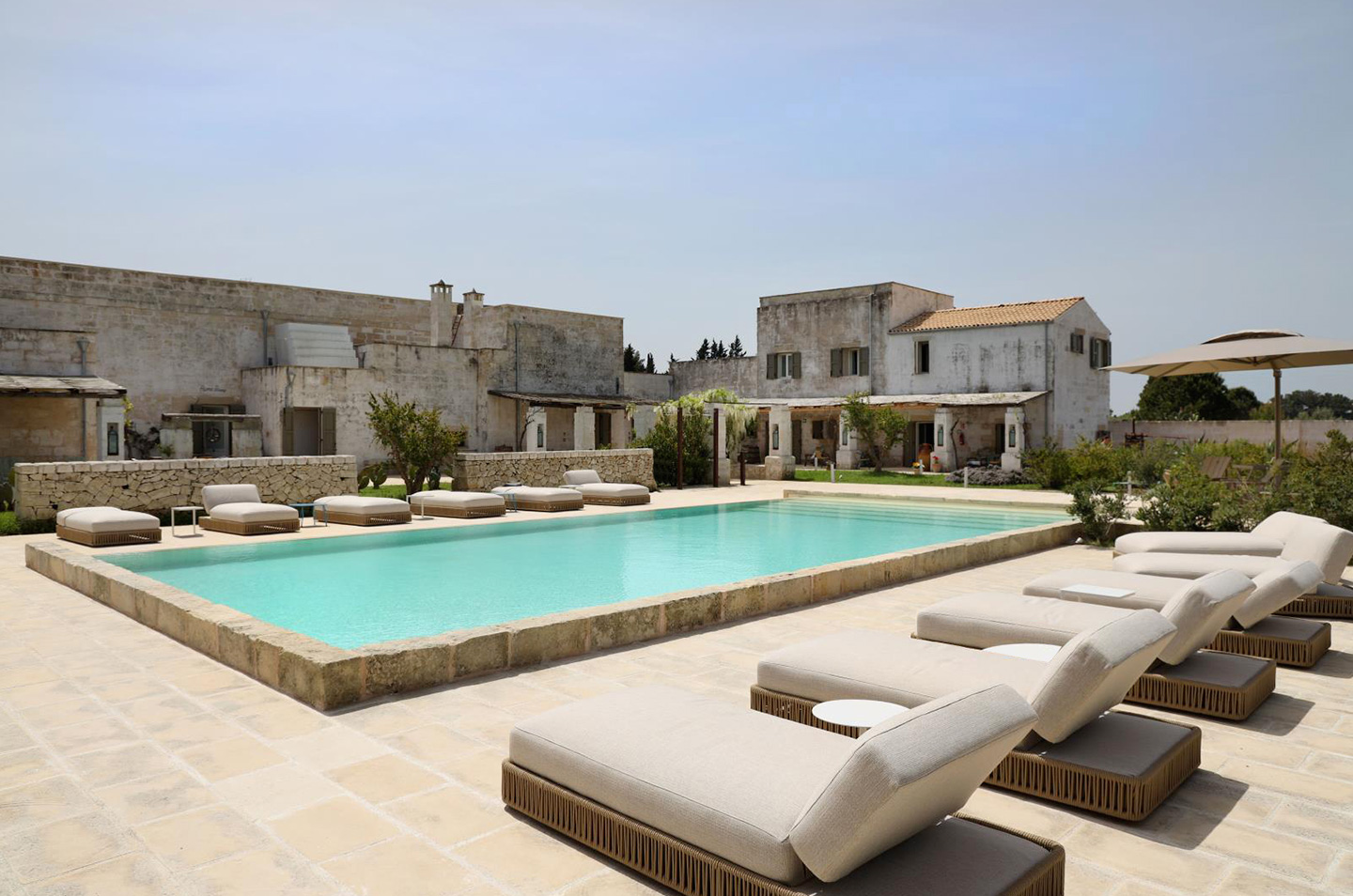
Their name evokes the balance and lightness of nature, and indeed they seem to float on the horizon. The pure, slender lines trace a presence that is discreet yet powerful, perfectly aligned with the understated elegance of Capri’s architecture. The aluminum structure, finished with an integrated side table, is designed to blend seamlessly into the surrounding materials. The soft, luminous textile surfaces reflect the sky and stone, while the ergonomic shape invites deep relaxation. Here, design is not ornament but poetic function — an invitation to stretch out and let oneself be cradled by the sound of the sea. Leaf represents the synthesis between engineering precision and natural sensitivity.
It is an almost zen presence, restoring balance to the body and lightness to the mind.
In Capri, where everything is light and wind, Acerbis’ design finds its ideal dimension: minimal, fluid, essential, yet full of emotion.
Matter, Light, Horizon
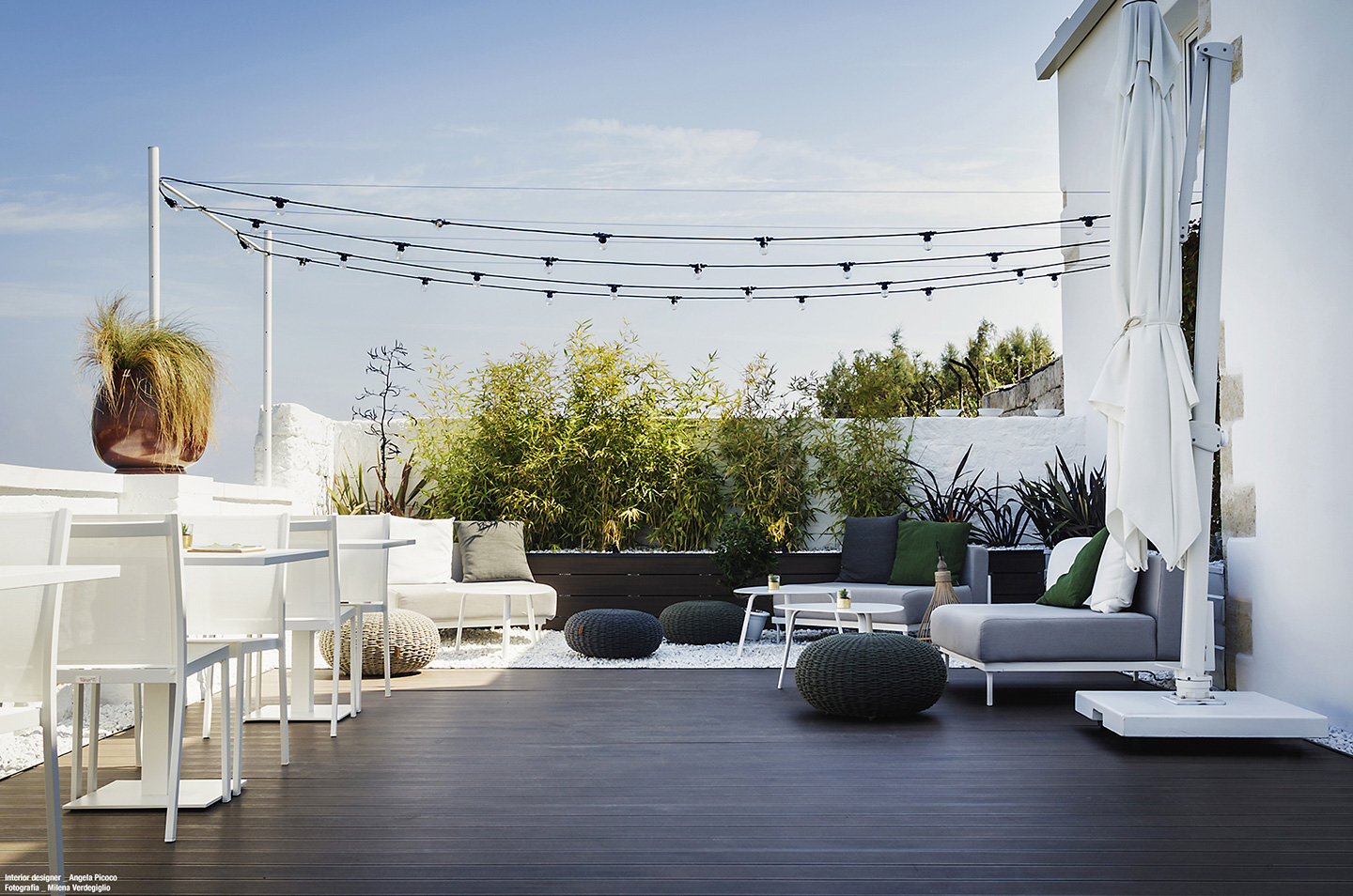
The project curated by Loto AD Project interprets Talenti’s design language as a natural extension of the architecture of Punta Tragara. Every environment has been designed to amplify the relationship with light and the sea, transforming the terraces into immersive spaces where design, comfort, and nature merge seamlessly. The Panama, Cliff, and Leaf collections coexist in perfect harmony: different in expression yet united by a shared identity made of proportion, balance, and tactile sensibility. Aluminum, rope, and fabric have been chosen for their ability to withstand natural elements and, at the same time, to express warmth and humanity. Nothing is rigid or artificial: everything breathes with the rhythm of the place. On the hotel terraces, Talenti’s design does not merely furnish — it interprets.
The light forms respect the silence, the colors dialogue with the stone and Mediterranean vegetation, while light itself becomes the true protagonist of the scene. It is a light that caresses, sculpts, and modulates the spaces. A light that changes with the hours of the day and the seasons, transforming every seat, every surface, every fabric into a living material.